
The True Cost of Manual Payroll in Nepal: Time, Errors, and Penalties
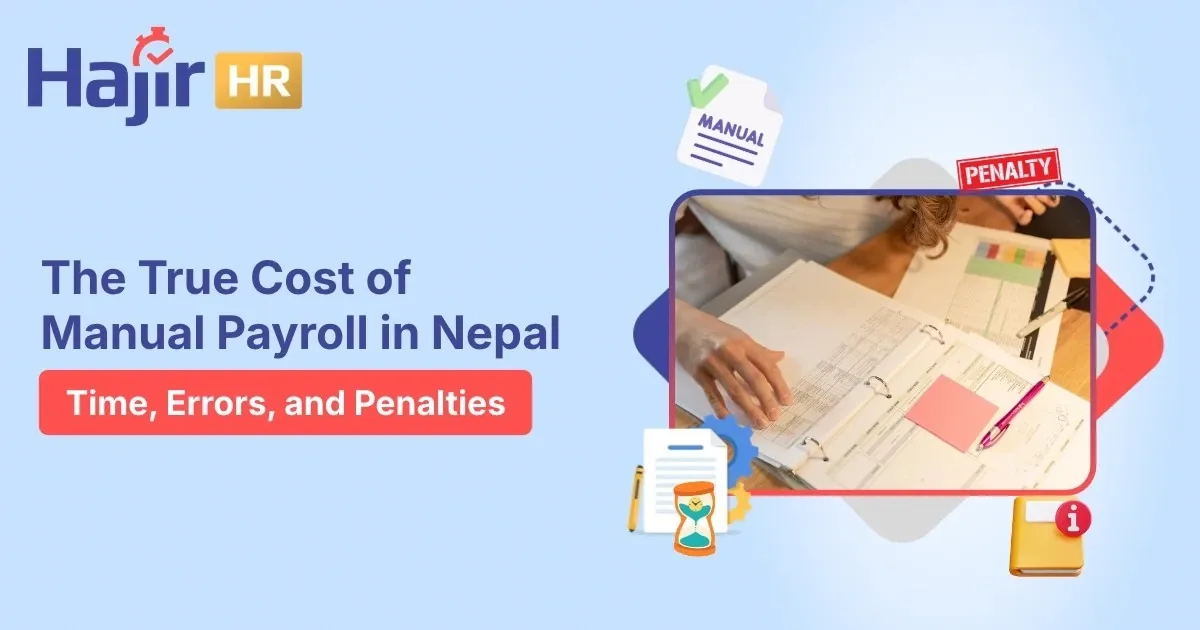
Even in numerous offices, stores, schools and factories,Manual Payroll in Nepal is still in operation. Owners open a spreadsheet every month and enter the salaries, allowances and deductions manually. Some people think that this is free, since it doesn’t require any software. This is not often the case. Hidden price is a gradual occurrence, after hours of repetitive work and small errors that add up over time. If information in one cell is incorrect, it can alter a salary slip, tax deposit and social security contribution all in one. Staff is able to identify mistakes in a matter of moments, and confidence can take a long time to be restored.

Regulators also are alert for late and inaccurate filings, which may result in extra charges. In recent years, the rules of payroll in Nepal are more stringent. It is important to calculate the contributions to theSocial Security Fund, tax deducted at source and tax contributions in Citizen Investment Trust. There are additional layers in the form of overtime, leave encashment and festival bonuses, over time. Each layer is an opportunity for another slip. This article will describe where the true processing expenses lie with manual processing. It addresses lost time, calculation mistakes and compliance penalties. It also depicts the ideal payroll process of growing Nepali businesses.
Recent Post

Why Many Nepali Businesses Still Process Salaries by Hand
The initial step in business is to start out with a simple spreadsheet. Feels familiar, flexible and free. For a small team, comprising 10 employees, there is no need to go any further than what a small team requires.
The changes in growth that that picture reflects happen very fast. There are new employees, promotions and resignations occurring on a monthly basis. A change requires a person to edit formulas and to have to recount totals.
There’s also a factor of habit. Many owners have always had one person prepare the salary sheet and rely on that individual for that. That person tends to have the entire process in his/her mind. As they depart or get sick, the business begins to have trouble operating.
Time Cost: Hours Lost Per Month
Payroll isn’t an individual job. It’s a series of smaller tasks which need to occur in a particular sequence. Attendance should be taken and attendance should be verified first. Next, balances of leaves should be updated.Overtime and late arrivals will then need to be computed to adjust salary.
Then the finance team deducts from the pay and creates payslips. You might need to review each pay slip individually, print them or mail them separately. Let’s say a company has fifty employees, they can spend 2-3 working days on this cycle.
The days are no cheap days. HR employees can utilize them for hiring or training employees or for capturing employee engagement. They may be utilized by accountants to do budgeting and cash flow planning. Rather, those who know how to do it copy numbers from one sheet to another.
The biggest lag time is from attendance data. The paper register, fingerprint export and the screenshots on the messaging app often don’t match. This will require a person to do a manual reconciliation of all differences. This reconciliation process is cumbersome, time-consuming and susceptible to conflict.
Error Cost: Small Mistakes, Big Consequences
Human errors are a common occurrence of payroll inaccuracies, particularly when people are doing the same calculation each month. A wrong decimal, incorrect formula or missing allowance can wreak havoc on an entire salary sheet. Often these errors remain undiscovered until an employee complains.
Look at some common scenarios. An employee who joins halfway through the month might receive the entire month’s pay. A second employee could lose out on paid overtime because no one entered it. A third may pay tax at the wrong rate.
Each error sets off a chain of corrections. The finance team must recalculate the payslip, adjust the next salary, and explain the change. The employee loses confidence in the process and starts to mistrust it.
Version control makes matters worse. Multiple people can edit the spreadsheet during the month. One person backs up an old version, then overwrites it with a new one. No one notices until payday.
Inaccuracies also impact on reporting. Incorrect amounts are recorded on accounting records, audit schedules and tax returns. It is much harder to correct an error after it has been made, than to avoid it in the first place.
There are a number of different compliance obligations related to Payroll in Nepal. The employers have to collect and deposit TDS as salary on time within the specified time limits. They are also responsible for paying theSSF contribution to the eligible employees on a monthly basis.Employers must also record contributions to approved retirement funds, including the Citizen Investment Trust.
Rates and thresholds change every year. For example, the annual Finance Act frequently revises tax slabs, exemptions, and reporting obligations. As a result, a spreadsheet you created last year may still contain old rules that no longer apply.
Late deposits can attract late fees and interest. Likewise, incorrect filings can invite questions during tax audits. Missing records can also weaken a company’s case if a dispute arises. In short, even inadvertent errors can have a significant impact.
This is where manual payroll in Nepal becomes a real financial hazard. No spreadsheet warns you when a rule expires, and none tells you the contribution rate has changed. Consequently, the owner has to keep everything in memory.
Employee disputes carry penalties as well. For instance, unpaid dues, withheld leave encashment, or incorrect deductions can lead employees to file complaints with the labour authorities. Moreover, resolving these complaints takes up managers’ time and tarnishes the employer’s image.
The Hidden People Cost: Trust, Morale, and Retention
Of all topics of discussion in the workplace, the one that is most sensitive is salary. Individuals budget their rent, school bills, family costs for payday. When a payment is late or incorrect, it’s a disruption of real lives.
Over and over errors make a statement. Staff feel that the company is unorganised and careless. Some start to start looking for employers who pay properly and on time.
It’s much more expensive to replace a good employee than to try to fix a payroll process. Lost productivity, recruitment and on-boarding are all costs. Thus reliable payroll is more than a bookkeeping exercise; it’s a retention tool.
There is also privacy, as well. Salary sheets are frequently disseminated via e-mail, shared drives and chat programs. The more copies you have, the more potential leaks will occur. Pay information should be given to only those who need it for sensitive information.
When Manual Payroll in Nepal Stops Working
All businesses eventually reach a stage when their spreadsheet is no longer able to cope. Some signs have reoccurred over and over. Having an early identification of them helps to save money and stress.
Be aware of these indications:
- It takes more than two working days per month to processpayroll.
- Staff frequently ask their pay slips what they’re being paid for.
- The salary sheet is known by only one person.
- Deadlines for taxes and SSF have been missed in the past.
- The business has expanded through new outlets or by staffing with shift workers.
- When preparing an audit, numerous old files have to be reviewed.
If three of these statements ring true, then the process is in need of attention. The longer the delay the more expensive it is.
Smarter Way to Run Payroll
Modern payroll software in Nepal eliminates most repetitive tasks. It feeds attendance, leave, and overtime directly into salary calculations. It also calculates deductions from programmed rules, so every employee gets the same rules, every month.
A good system also keeps up with rule changes. When tax slabs or contribution rates change, you update the setting once and it applies to everyone. The system creates payslips automatically and sends them securely to every employee.
The software also simplifies reporting. Finance teams can pull SSF contribution summaries, tax statements, and salary registers in minutes. Auditors get clean records instead of a myriad of individual files.
Some online platforms like hajir HRM have a single platform for attendance, leave and payroll. This linkage eliminates the reconciliation effort which is the time-consuming aspect of most manual processes. This translates to quicker payroll processing, reduced disputes and peaceful month ends.
It doesn’t have to happen all at once to move away from spreadsheets.Attendance and leave are the first functions to be automated by many businesses. Then they add salary processing when the data is deemed to be reliable. A slow pace allows the team to feel at ease and to make the transition easy.
Frequently Asked Questions (FAQ)
Manual payroll involves the manual calculation of payroll, deductions and payslips in spreadsheet form. There is no specific system set-up to perform the calculations. All of the figures rely on manpower input and checking.
As a company grows, employees, allowances and compliance requirements come along fast. Spreadsheets are not well suited to reliably deal with this complexity. The more employees you add, the more likely it is that you'll make a mistake with payroll or not submit it on time.
This will run in a time that depends on the size of the team and the quality of the data. One or two day(s) may be required for small teams. There are several days for larger teams that have shifts and overtime.
TDS on salary and SSF contribution for eligible employees is a common issue which is handled by the employers. Others are responsible for managing authorised pension fund contributions. This may vary from company to company, so it's a good idea to read the latest government notices.
When filing late and inaccurate filings come penalties like interest, fines or audits. The exact amounts are subject to applicable law and type of default. It's important for employers to double check existing regulations with an accountant or authority in question.
Change if payroll is slow, mistakes repeat or compliance deadlines are difficult to keep track of. Other good indicators are branch expansion and shift work. Adopting earlier will be cheaper than correcting it later.
Software developed for Nepal can be set up to comply with the tax slabs and contribution rates in Nepal. Select provider that comes with frequent rule updates. Check with your financial staff at all times.