
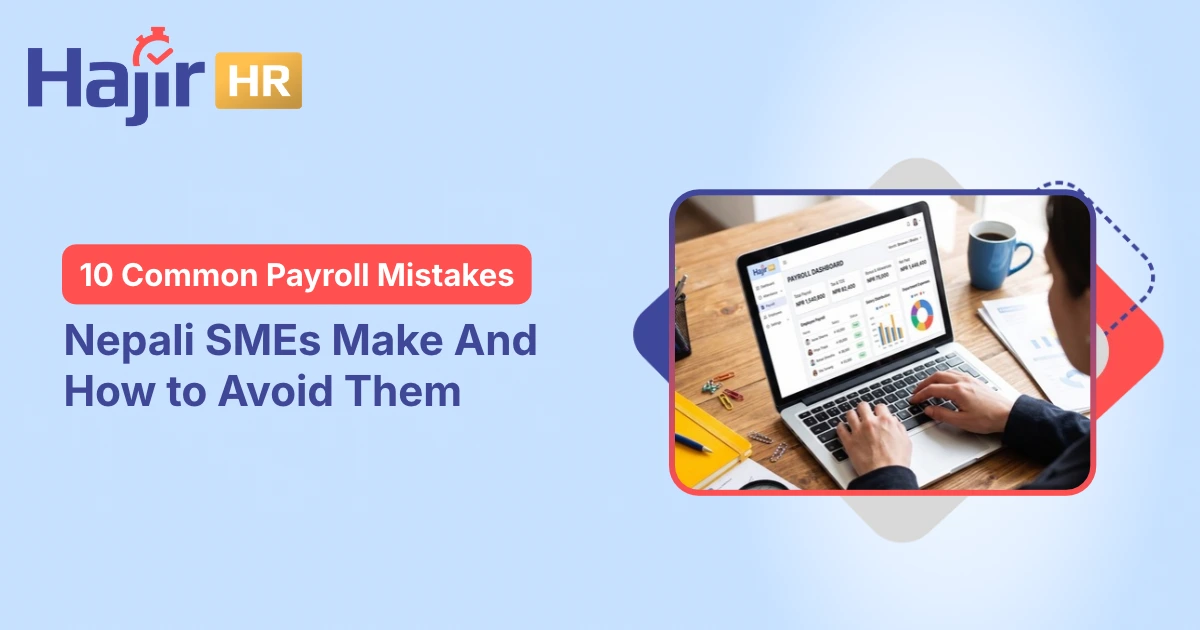
10 Common Payroll Mistakes Nepali SMEs Make And How to Avoid Them
One of the most critical parts in Nepali SMEs is a payroll system and any mistakes can be very expensive. Staff want their pay cheques every month on time and right. Mistakes can erode trust built over the years. When a business is growing, it’s often simple in the beginning for owners to manage their own payroll. It appears a few staff members and a spreadsheet are sufficient.
The changes in growth are very rapid in the picture. Allowances, overtime payments, leave balances and various joining dates are included in the new hires. The labour and tax regulations further burden Nepal. The numbers required by theSocial Security Fund and the income tax and by the Labour Act are accurate. The consequences of missing a deadline are penalties, and awkward discussions with your team.

It’s not necessary that a large HR department is essential for strong payroll management in Nepal. It’s a matter of processes, records and reviewing numbers before paying. There are common and typical payroll errors that are common to most businesses. In the following list, a practical solution to each error follows each error. We illustrate how Hajir HRM facilitates automation of this work along the way.
Recent Post

1. Treat all workers equally
The error: Many businesses mix up the various categories of workers such as probationary, permanent, part-time and contractors. The rights and deductions are different for each category. Failure to classify the staff puts the business at risk during inspections.
The Solution: Send out appointment letters and categorize all employees accurately from the get-go. Documentation of the type of employment in theemployee file and checking if the employment changes.
2. Wrong calculation of the SSF Contribution
The error: Employers may often apply the percentage to the incorrect salary base or fail to remember new hires. The basis is 31 per cent of the basic salary. Employer contribution is 20% and Employee contribution is 11%.
The Solution: Check current rates with the Social Security Fund and enroll all eligible employees upon his/her entry. To ensure that theSSF contribution is applied regularly each month, payroll software can be used, like Hajir HRM.
3. Depositing Contributions Late
The error: Late wages lose value and will incur some sort of penalty.
The Solution:Make a reminder and set it at least a week prior to each deadline. Make deposits during the same cycle you make the payment to the official portal, and reconcile payments to the official portal quarterly.
The error: TDS applies to income, marital status and the rules are determined on an annual basis as per fiscal year. It’s a very common error to use last year’s slabs. If it is under deduction, that business will be liable, and if it is over deduction, it will frustrate the employees.
The Solution:Make changes in tax settings at the beginning of each financial year (in Shrawan). Make a deposit on time with the Inland Revenue Department.
5. Ignoring Overtime Rules
The error: The Labour Act stipulates that extra work – typically at 1.5 times the normal pay – should be paid for more. Time off for services rendered that are promised verbally or as a substitute for wages creates conflicts.
The Solution: Use dependable attendance records to log overtime. Overtime Pay – Calculate Overtime Pay – No over time pay is left over the cycle.
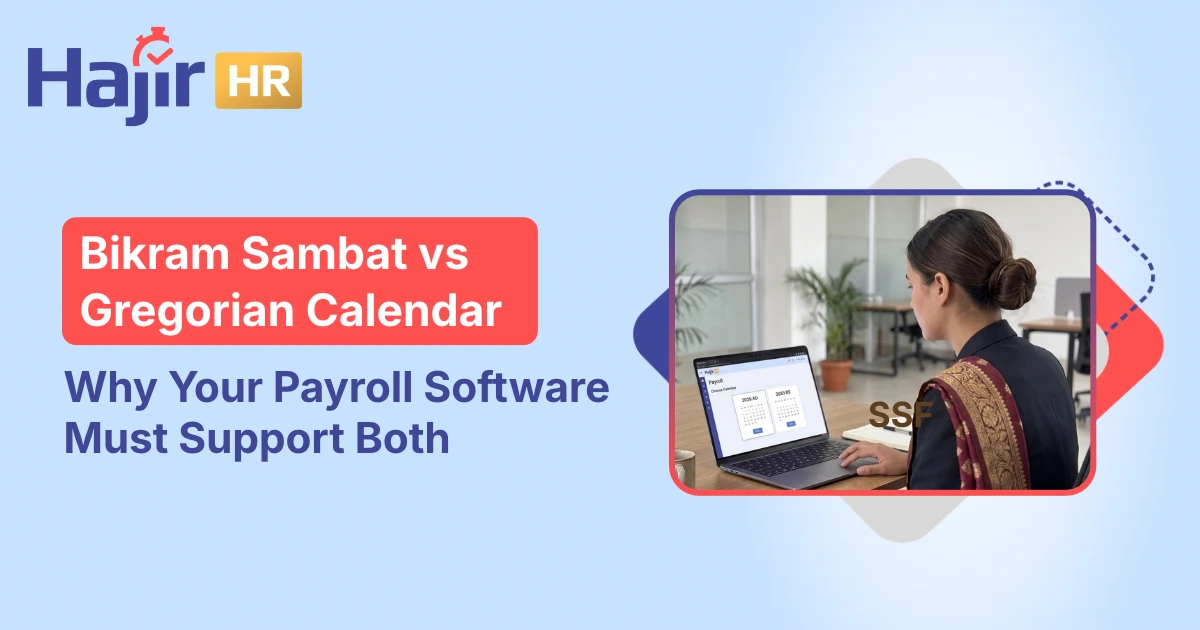
6. Mixing Bikram Sambat and English Dates
The error: A lot of offices useBikram Sambat months for payroll while others use Gregorian months. Nepali months are of unequal length ranging from 29 days to 32 days and hence a mix of systems will not provide accurate daily rates.
The Solution: One calendar for payroll and record how the partial months are prorated. The removal of the need to manually convert a system that supports Bikram Sambat dates.
7. Using only Spreadsheets
The error: Spreadsheets are OK for a few staff members. Formulas fail, versions proliferate and a single error wreaks havoc on Nepali SMEs that continue to expand.
The Solution: Switch to a reliable payroll system that canautomate payroll calculation, deductions and payslips. It also displays the overall monthly salary expenses to the owner.
8. Disconnecting Attendance from Payroll
The error: Salary is based on attendance and leave, but many businesses use different notebooks to record attendance and leave. The absence of an attendance record and unauthorised leave soon becomes a problem.
The Solution: Make attendance automatically tie to payroll and secure the records prior to any calculations. Hajir HRM does theattendance, leave and payroll in a single stop and maintains consistency of figures.
The error: Surprises businesses with allowance and annual bonuses during Dashain. When there’s an urgent requirement for cash, you may not receive it on time or in full.
The Solution: Be knowledgeable of your Labour Act responsibilities before the festival season. Take some time to determine a monthly amount and earmark those payments for these so they do not take a toll on cash flow.
10. Skipping Payslips, Records, and Regular Reviews
The error: Some employers pay salary in cash, without a breakdown. Employees wouldn’t know if deductions were correct without payslips and the business wouldn’t be able to establish that they were paying them correctly.
The Solution:Give a payslip of gross, net and deductions monthly. Have tax & SSF receipts in order. Check your process annually as there is frequent change in the rules and procedures under theFinance Act. Regularly reviewing business compliance makes Nepali SMEs stay compliant.
Frequently Asked Questions (FAQ)
The primary causes are limited HR resources, manual processes, and often- Changing rules. Many other tasks are also performed by small teams, who are responsible for payroll as well.
The average is 31% of basic salary. Employer contribution is 20% and employee contribution is 11%. Check with theSocial Security Fund for existing rates.
Check it at least on an annual basis, each fiscal year. Check it periodically when tax and labour laws are amended.
With a small number of employees it is not necessary. As the number of employees increases, it becomes incredibly helpful as it minimizes errors and saves time.
Hajir HRM integrates attendance, leave and payroll into a single system. That way, there is less paperwork and data can be kept accurate.
Maintain agreement letters and attendance log, monthly payslips and tax deposit receipts. Keep SSF deposit confirmations.