
Stop Payroll Errors With an Attendance Tracking System (ATS)
An Attendance Tracking System (ATS) logs the time of employees’ arrival and departure and time off work. In the past, payroll staff used to keep records on paper registers or manually input the data in spreadsheets, which led to a lot of inaccuracies. A missed punch, late arrival or a request for leave not recorded could wreak havoc on a wholepayroll cycle. Scale that up to, say, ten, 20 or even hundreds of employees and the administrative load quickly gets too large. This is where automated attendance software comes in handy. It reliably records time data, alerts to irregularities on the spot, and provides accurate data directly into payroll calculations.
HR teams no longer treat this system as a luxury. It helps them manage shift schedules, leave balances, and compliance. Today it runs at the core of daily business. It catches small errors before they turn into giant payroll problems.
Recent Post

What an Attendance Tracking System Actually Tracks
This software at the end of the day tracks four primary areas, including check-in and check-out times, late comers, leave requests and the lack of attendance records. Each punch is dated and recorded, providing a permanent record for employees andmanagers to refer to. Many platforms also add up the hours worked automatically so there’s no need for anyone to add up timesheets at the end of a pay period.
The system applies whatever rules the company sets. For example, it may allow a 10- or 15-minute grace period before marking a punch late. Leave requests follow the same path. Employees submit a request, and managers approve or decline it in the same app. No one logs into a second system. If an employee has no punches for a day, the system flags that gap. HR then resolves it before payroll runs.
Why Late Arrivals and Missing Punches Cause Real Problems
One late start rarely matters much. Across a whole workforce, though, those minutes add up fast. Some employees arrive late week after week. Managers often miss the pattern until performance visibly slips. A reliable system logs every occurrence automatically. Managers get hard data instead of relying on memory or informal complaints.
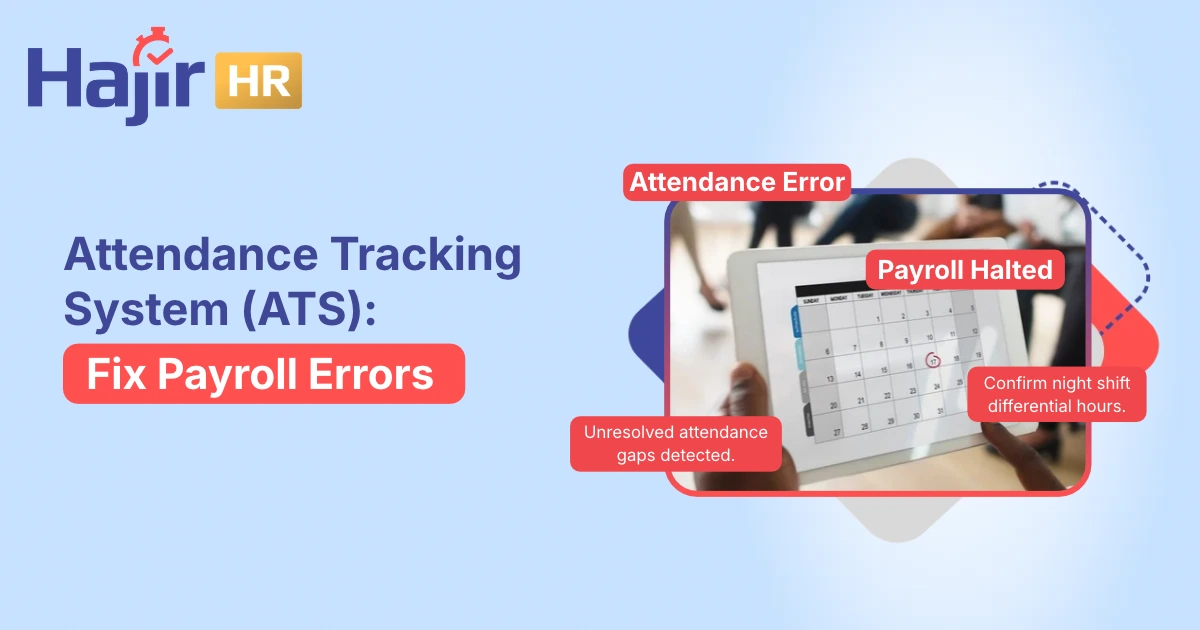
Losing attendance records can create another major headache for businesses. If an employee forgets to punch in, the system may miss their hours. A biometric device may also fail to read an employee’s scan correctly. As a result, payroll teams may not know the employee’s actual working hours. This can lead to inaccurate pay, employee dissatisfaction, and conflicts with payroll administrators. Staff may also spend hours discussing and correcting attendance records. A good attendance system catches these issues early and sends automatic alerts. Payroll teams can then fix attendance errors before payday. This prevents incorrect paychecks and reduces unnecessary back-and-forth.
Leave Management and Its Connection to Attendance
Leave tracking is closely related to attendance as both directly impact on pay computations. Whether it’s sick leave, casual leave or annual leave, employees accrue leave balances over time.When leave records remain separate, HR teams must cross-check them with attendance logs, which increases the risk of errors.
A properly integrated platform updates leave balances automatically once it approves a request.For example, an employee taking three days of annual leave will have those days reflected in their attendance record without manual adjustments.
This also helps to avoid the typical scenario of staff reporting as “absent” for days that they have approved leave, causing staff frustration and unnecessary payroll conflicts.
Connecting Attendance Data to Payroll Processing
The true power of this software is when attendance information is easily integrated into payroll. There are delays and potential for transcription errors when manually entering data in between different attendance and payroll systems. If both are turned on, hours worked, overtime, late deduction and leave adjustment are automatically calculated from the raw attendance data gathered during the pay period.
This is crucial for companies that employ staff with shifts or hourly wages, where a minor discrepancy in time can have a significant impact on their compensation.Payroll automationalso provides a clear audit trail, an advantage if a payroll dispute does occur, or a labor compliance audit question does arise.
Choosing the Right System for Your Business
The features that are needed are not universal across all businesses, and what suits the right business will greatly depend on the size of the team, the work structure and any existing tools in place within the business. A single location business may be able to get by with a basic biometric or card punch system. Other options, such as mobile check-in, GPS verification or web-based punch clock are better for businesses that have remote workers or multiple locations.
Care should be taken in evaluating the integration capabilities. A seamless integration with current payroll and HR systems can save a ton of administrative time as opposed to one which needs manual exportation and importation between systems. Another aspect of reporting that is significant is that it can help HR teams quickly identify trends in late arrivals, leave balances, or missing attendance, preventing them from turning into larger issues.
Common Mistakes Businesses Make When Adopting This Software
Numerous companies launch new time software and fail to share the guidelines with staff prior to the implementation. When staff members don’t understand grace periods, rounding rules, and the process for approval, it often follows with confusion and complaints soon after launch.
A common error is to not do a trial period with a limited group of users before company-wide implementation. By testing in one department first, it will help to bring to light configuration problems that can include misaligned notice periods, incorrect shift start/end times and holiday calendars, which won’t impact the whole organization’s payroll.
A few businesses also don’t realize the significance of having a backup plan in case of technical issues. There is a possibility of a failure in biometric scanners, and apps may not connect in some areas. A manual override procedure will help avoid a big payroll issue if a technical glitch occurs.
Reducing Payroll Disputes Through Transparent Leave Policies
While attendance information can solve half the problem, leave policies must remain ambiguous for employees as well. A lack of clarity on carryover dates, days or on leave calculations for partial days will lead to more conflicts than missing punches. Having a straightforward, documentedleave policy and linking it directly to the attendance and payroll system ensures that employees can see their leaves at any point. This transparency usually minimises HR issues relating to unauthorised deductions or other time-off requests.
Frequently Asked Questions (FAQ)
Most systems flag any day without a recorded check-in or check-out and send an alert to HR or the employee, allowing correction before payroll processing finalizes hours worked.
Yes. Businesses set a grace period in the system settings, and any punch recorded after that window gets automatically marked and logged as late.
In most modern systems, yes. Leave requests, approvals, and balance updates typically run through the same platform, keepingattendance records and time-off data aligned automatically.
Without integration, HR teams must manually transfer hours, late deductions, and leave adjustments into payroll, which increases the risk of calculation errors and delays.
Not always. Biometric devices reduce buddy punching and manual entry errors, but mobile check-ins or card-based systems can also work well depending on the business's structure and budget.