
Overtime Calculation in Nepal: Understanding Fair Employee Pay
Accurate overtime calculation in Nepal is crucial for ensuring fair employee pay and timely wages. Businesses should maintain proper records when employees work beyond their regular or statutory hours. Accurate overtime tracking can help prevent payroll errors and reduce confusion between employees and management. It also allows businesses to maintain better control over working hours and employee compensation.
Overtime is common across many industries in Nepal, particularly during peak seasons and urgent projects. Businesses may require employees to work additional hours due to increased workloads, staffing shortages, or tight deadlines. Occasional overtime is usually easier to manage, but tracking it manually can become challenging when employees work overtime regularly. An effective overtime management system can make the process more organized, accurate, and easier for businesses to manage.
Recent Post


What Is Overtime?
Overtime refers to work performed beyond an employee’s normal contractual hours. The treatment of these additional hours depends on applicable labour provisions and employment contracts. Clear overtime policies help employees understand when extra working hours apply and how they are handled.
Employees may work overtime for several reasons, including urgent projects and increased seasonal demand. Tight deadlines may also require employees to work beyond their regular schedules. When employees work additional hours, those hours should be properly recorded as overtime. Accurate records help businesses calculate employee compensation correctly and allow employees to clearly understand their working hours.
Understanding Working Hours in Nepal
An important element in calculating overtime is working hours. Regular employment hours should be stated in the written contract of employment. Employers should also have an awareness of the hours to be expected from their employees. There is no evidence of Nepal having any such labour provisions as working hours or overtime. But businesses should adhere to requirements applicable to their employees. Also outline schedules in company policies.
A variety of different working arrangements may be used in different businesses. Some have set schedules and others flexible or night shifts. Such systems may prove to be a challenge for manualtime-tracking. Ensuring accurate attendance records can address many of these questions. Check-in and check-out records accurately show the number of hours worked. Based on this data, HR can complete payroll processing work.
What is the calculation of Overtime in Nepal?
The first step in calculating overtime is finding the correct hourly rate and determining what it is. Then, overtime hours available for an employee must be calculated. Overtime rate is then applied for payment.
A simplified formula is:
The overtime pay amount is calculated by multiplying the overtime hours by the hourly rate by Overtime Rate. An employee, for instance, has been engaged at the rate of NPR 200 per hour. Employee works for three on-demand overtime hours. If the rate, applicable twofold:
3 × NPR 200 × 2 = NPR 1,200
Here is an example of simple calculation. Calculations of actual payroll should be based on the appropriate labour requirements. Compensation needs of the employee should also be taken into consideration. Uniform approach of calculation (1 method). Standard processes simplify and verify the management of payroll.
Factors Affecting Overtime Calculation
Several factors can affect overtime calculation. The employee’s applicable salary is one important factor. Regular working hours and total overtime hours should also be considered. Keeping these details accurate helps businesses maintain reliable payroll records.
Work schedules can also affect overtime records. Shift workers may follow different schedules from regular office employees. Therefore, accurate shift and attendance data are essential for proper overtime tracking. Businesses should also consider holidays and rest days when managing overtime. Separate records may be required for these working periods.
Overtime approval is another important consideration. Companies should establish clear guidelines for approving additional working hours. A proper approval process can reduce confusion and make payroll processing more efficient.
Why Accurate Overtime Records Matter
An accurate record of overtime is beneficial to both employer and employee. Employees can have a better grasp of the impact overtime can have on their wage. Employers are also able to have accuratepayroll information. Keeping overtime records incorrectly, can cause needless controversy. Human resource departments might want to look into why the leave was approved, as well as attendance records. This can be time consuming and resource intensive. There can also be errors generated more than once when doing it manually. A small mistake can have a big impact spread among employees. Improperly kept records could actually increase these risks.
Overtime details can also be utilized for workforce planning. Through the use of overtime histories, managers are able to recognize departments that regularly have overtime situations. This information can be used to enhance staffing and scheduling.
Problems with automatic overtime calculation
Sadly, many companies still rely on spreadsheets to track overtime. This approach may work well for smaller teams, but it becomes harder as the number of employees grows. HR teams often collect attendance information from different sources and manually calculate overtime hours. This process can take considerable time each month. Common issues include missing overtime records, incorrect working hours, and employees forgetting to submit overtime information. Reviewing older records can also be difficult, which may affect payroll efficiency and salary accuracy. Maintaining accurate records is therefore important for building employee trust and ensuring smoother payroll management.
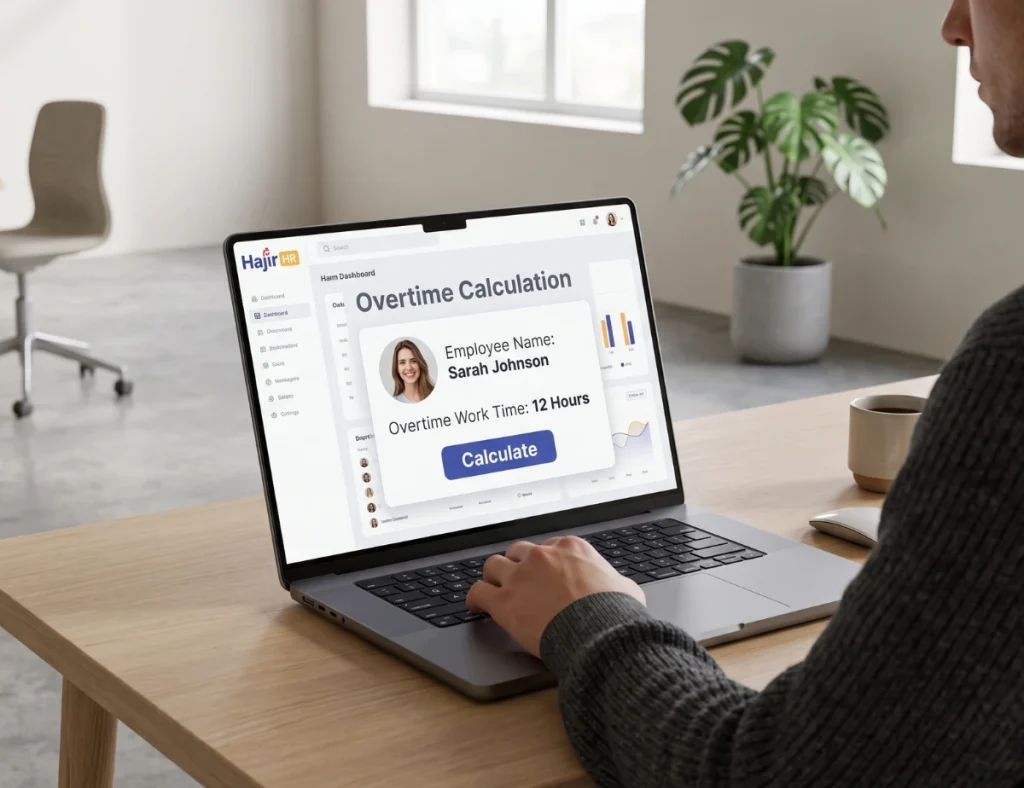
Technology has made overtime management much easier for modern businesses. HR technology can improve overtime tracking through digital attendance systems that automatically record employee working hours. These systems can organize attendance information on a single platform, making it easier for HR teams to access and review records. Some systems also include shift and overtime management features, reducing repetitive manual data entry. Digital records make historical attendance information easier to access and can also simplify monthly payroll processing. By connecting attendance and payroll systems, businesses can reduce manual tasks, improve payroll accuracy, and manage overtime more efficiently.
Best Practices for Overtime Calculation Management
It’s wise to start a business with a clearly defined overtime policy. Staff need to be aware of when overtime may occur. There is the approval process as well; managers should know it. Records must be taken regularly. Occasional overtime should be examined prior to processing payroll. This can aid detection of errors at an early stage.
It is also advised to keep the overtime trend monitored regularly for businesses. Overtime may be an indication of staffing issues and/or workload. Sometimes better scheduling can minimize unnecessary overtime. Appropriate bookkeeping is also critical. Attendance records that are kept in an organized fashion can help you to answer questions about payroll in a timely manner. It can also help facilitate improved workforce planning.
Overtime and Employee Productivity
With overtime, it may be a solution to dealing with temporary workload surges. But if overtime is a regular thing it could be a sign of problems within the operations. Long hours on a regular basis may have a negative impact on employees’ productivity.
It is important for businesses to pay attention to overtime trends. Over time: Staff manpower shortages. Also may display improper scheduling or workload distribution. Implementing a balance pricing strategy can enhance business productivity. It enables enterprises to attain operational requirements more effectively. But it can also ease an unwarranted burden on the employee
A Better Approach to Overtime Payroll
The first step to good overtime management is to have accurate attendance data. Overtime procedures are well understood by virtue of clear policies. Correct calculations also boost the reliability of payroll. This can be made easier for growing businesses by digital HR systems. Taking attendance electronically saves time and menial tasks, and cuts down on mistakes in the data. They also help to provide more insight into overtime trends.
Clear policies paired with reliable technology equates to better payroll management. Staff flex more information about their working hours. HR teams also save lots of time fixing handwritten documents. The goal of this objective is to make overtime practices more efficient.The objective is to create more efficient overtime practices.
Controlling overtime is a crucial part of current salary: Management of payroll. To perform calculations correctly, it is essential to have accurate attendance. Clear policies assist employees and managers to know their duties. But for smaller teams, manual systems could be suitable. If you’re a larger enterprise, you might require more effective solutions. HR software tools for managing attendance and diong overtime calculations.
An outlined overtime procedure for fair employee compensation. It also provides better payroll accuracy and workforce planning. The improvement in record keeping leads to improved employer-worker transparency.
The scope of Overtime Management in the broader picture
Overtime isn’t just about extra pay on an employee’s paycheck. It is related to employee satisfaction, workforce planning, payroll, and attendance. Software logs help in proper salary calculations. Well-defined policies help establish consistent overtime practices. It can become much easier to manage with the help of technology.
Businesses in Nepal may also benefit from better payroll accuracy by making a concerted effort to manage overtime more effectively. It can also streamline administration and enhance the visibility of staff. Having a structured approach enables businesses to better manage extra working hours. Providing an easier process for both employees, managers and HR teams.
Frequently Asked Questions (FAQ)
It sets out how to pay for any additional hours you are able to work.It specifies the eligible additional hours and how they can be paid. Overtime and applicable rates are taken into account when calculating.
Overtime hours and hourly overtime rate are used to calculate the overtime. The overtime rate charged is then used.
Actual working hours are recorded on attendance records. They are helpful for overtime and payroll purposes.
Yes, spreadsheets or analogue records can be utilized. But, with bigger work forces it becomes difficult manually.
There are a number of HR systems that do attendance and working hours tracking. Some additionally supply overtime and employment management attributes.
Monitoring and regular monitoring can identify staffing and workload concerns. It can also facilitate improved labour planning.
A company is expected to have good attendance information. Having clear policies and digital HR systems can also minimize the chances of faulty entries.