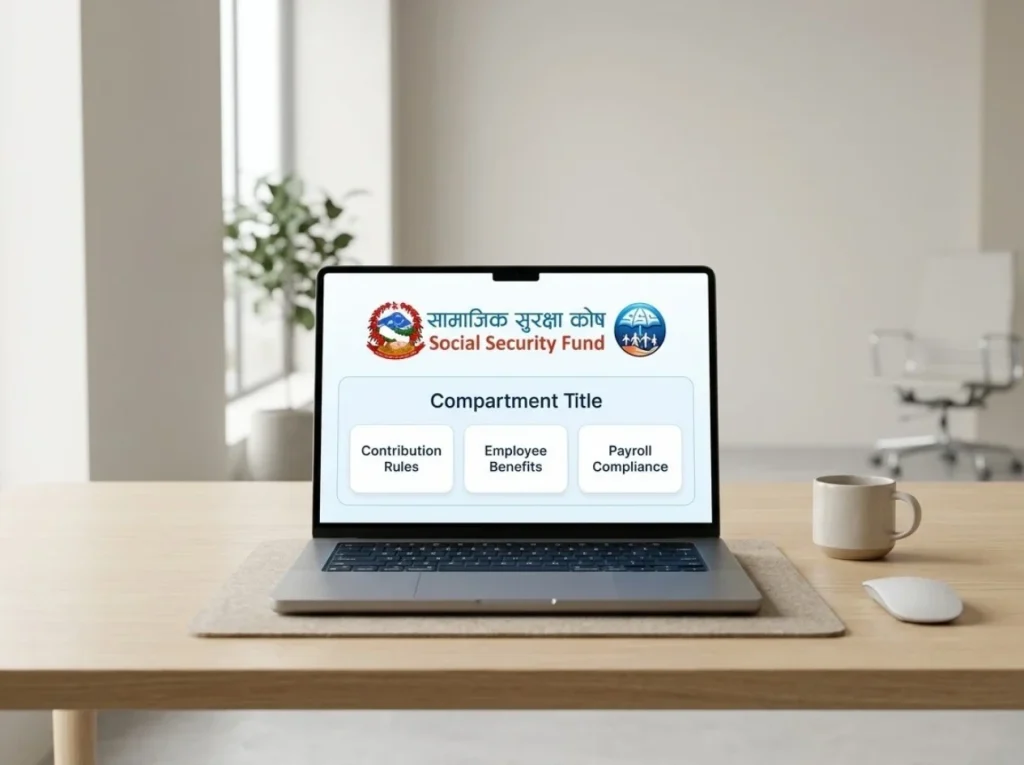
SSF Nepal Explained: Contribution Rules, Employee Benefits and Payroll Compliance
SSF Nepal has shifted the mindset of employers and employees about retirement, health and financial protection in the workplace. TheSocial Security Fund (SSF) was established according to Social Security Act 2074. It’s been in operation since 2018 to provide a stable safety net for workers. Prior to this, many workers in the private sector had little more than minimal wage coverage. In the modern day, the workplace becomes structured, accountable and secure thanks to SSF. This change brings with it new obligations for business owners. All employers need to be aware of registration, contribution and reporting requirements.
Fast Onboarding
Secure Cloud-Based
Employee Self-Service
SSF Nepal: 31% contribution
Automate with HajirHR
Employee 11%, employer 20%
Deposit on time
For workers, SSF translates to improved pay and benefits and better savings for the future. But many teams just can’t get the nitty gritty right. One of the most frequent questions is about contribution rates, deadlines and accuracy of payroll. The detail is key, as penalties and unhappy staff can result from small errors. This article briefly describes what SSF Nepal is in layman’s terms. It addresses the mechanics of contribution, the benefits available to employees and what employers are required to do. It also highlights the reduction of manual work by HR software like HajirHR from HajirHR.com. Proper attendance and salary information are the core of all SSFs. Then it is easy to comply.
What is SSF Nepal, and why is it important?
A government body that administers contribution-based protection to workers is called the Social Security Fund (SSF Nepal). It is a monthly contribution that it receives from employers and employees. The fund then pays benefits through multiple schemes. These are health, maternity, accident, dependent and old age schemes.
The system is important because it has a connectedness of formal jobs and actual protection. Workers have access to savings and insurance they can carry with them throughout their working lives. Employers have a transparent and fair pay framework. This fosters trust in the staff and management over time.
How SSF Contribution Works in Nepal
The amount of the employee’s basic salary is the basis for theSSF contribution.The monthly contribution equals 31 per cent of that figure. Employees contribute 11 per cent through salary deductions. Employers contribute the remaining 20 per cent from their company funds.
The SSF divides these contributions among several purposes. A large portion goes toward the retirement savings account. Another portion covers gratuity. A smaller percentage supports accident and disability protection. The fund determines the exact allocation. Employers should check the official SSF website for the latest details.
The contribution rate matters, but timing also plays an important role. Employers must submit contributions by the monthly deadline. Late payments may result in additional costs. Many businesses lose money when they miss the payment deadline.
How SSF Contributions Are Calculated
Once the salary base is understood there is a simple pattern in calculating SSF. This begins with the worker’s basic monthly salary. Typically, this base does not include allowances and bonuses. Employers should verify details of the base with the most up to date SSF guidelines.
Then 11 percent of the basic salary is taken as the employee’s share. The employer contribution is 20 percent of the same amount. These two will add up to give the total amount deposited for that employee.
Let’s imagine an employee who earns a basic salary of NPR 30,000. The employee share is 11 per cent or NPR 3,300. Employer share is 20% NPR 6,000. Hence, the aggregate of monthly deposits is NPR 9,300.
The monthly salary is less than the employee’s NPR 3,300. The employer’s NPR 6,000 are paid from the company funds in addition to the salary. The two amounts are deposited in one at the end of the fund.
This calculation has a greater impact than most teams are aware of when they look at attendance. In the event that an employee takes the benefit of paid leave, there can be a decrease in the payable basic salary for the month. Then there may be changes in the contribution base as well. Care needs to be taken with joining and exit dates too.
This is where HajirHR can help. It directly feeds into the payroll and maintains an accurate salary base, and it keeps attendance andleave records. HR teams can then use the 11percent and 20 percent shares without having to recheck all employees manually.
SSF Benefits for Employees in Nepal
Protection to the employees is available through various schemes of SSF Nepal. The schemes focus on different life risks. They provide a wider safety net than one salary can offer.
The medical, health and maternity scheme provides assistance with health treatment and childbirth. The compensation scheme for an accident and disability, if a worker suffers an injury or is unable to work. If an employee dies, the dependent family scheme will support the families. The old age scheme is designed to create a savings fund and income during retirement, in a similar way to a pension.
This will make jobs more attractive. Employers who provide the proper social security are often preferred by skilled candidates. Good SSF compliance can, therefore, enhance the hiring and retention process.
Responsibilities of employers under SSF Nepal.
The bulk of the administrative burden is borne by the employer. The first step would be to register with the fund. All eligible employees should also hold an enrollment and be assigned a contributor record.
Once registered, employers are obliged to work out their contributions each month. They have to take out the employee share and calculate the employer share. They will then have to pay the entire amount on time and provide the necessary information. Records must be maintained in case of audit and for future reference.
Employers should also keep up to date with any changes to the rules. Government policy is subject to change and new directions can impact rates or procedures. By checking official announcements, you can avoid any unpleasant surprises.
Common SSF Payroll Mistakes to Avoid
A lot of mistakes are due to manual processes. Spreadsheets are simple to begin using, but difficult to believe. If the wrong formula is used, it can impact all employees in one month.
A frequent error is the use of the incorrect salary base. The SSF calculation is based on basic salary, and not on take-home pay. When the two are mixed, under-payment or over-payment results.
Lack of attendance information adds to the trouble. Absences, salary changes with days of absence and joining date. Note that if attendance is incorrect, the SSF amount will also be incorrect. The last and most significant risk is late deposits. Even with reminders, busy HR teams can forget deadlines. This can be avoided by a simple system alert.
How HajirHR Supports SSF Nepal Compliance
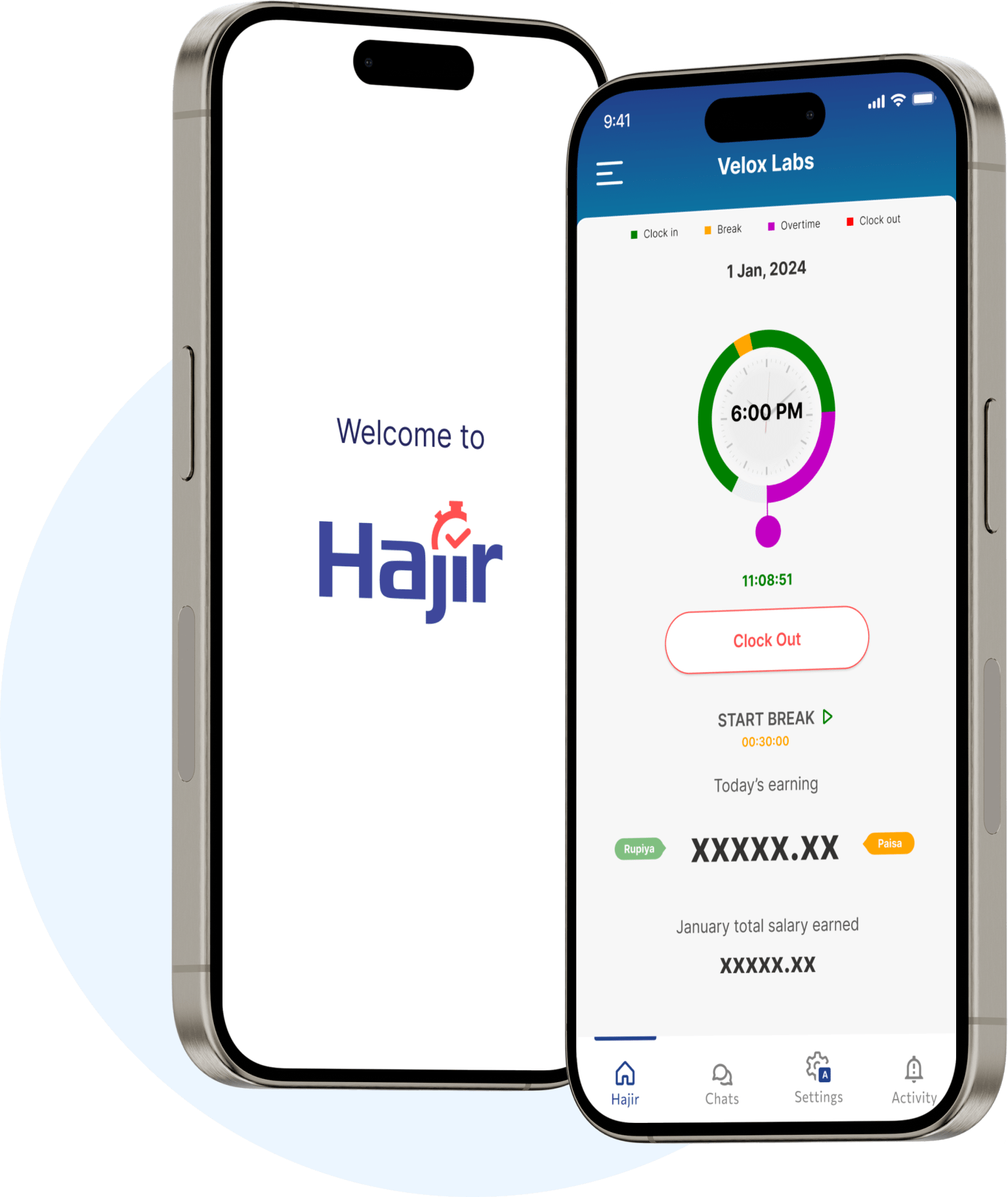
HajirHR is created for the reality of Nepali workplaces at hajirhr.com. It integrates attendance, leave and payroll on a single platform. That’s important because SSF relies on accurate salary information.
Digital attendance makes salary calculations quicker and cleaner. Leave balances automatically update. Overtime and absences are recorded into payroll without having to retype them. This minimises the possibility of human error.
Having accuratepayroll information makes it easier to prepare the figures for SSF contributions. HR teams can see the analysis of the employee and employer shares in a clear format. They can also maintain their records in an orderly manner for audits. That eliminates hours of time spent each month and increases the confidence of managers.
It is best to be used by growing companies. The more people there are, the more difficult it becomes to manage the manual SSF. Even when there are more people on the team, a structured platform like HajirHR helps maintain the same flow.
In Nepal, the adoption of payroll software has been gaining momentum as businesses become increasingly automated. Learn about the latest payroll solutions and how they can help minimize mistakes and save HR teams time. Become familiar with the key features that can help Nepali businesses manage SSF, tax, attendance, andemployee records more efficiently.
Frequently Asked Questions (FAQ)
SSF is a Social Security Fund. It is the body responsible for the administration of contribution-based social security in the worker.
The overall contribution is 31 per cent of the basic salary. The employee is responsible for 11 per cent and the employer is responsible for 20 per cent. Check with the official fund for the current rates.
Employers who are legally required to pay into the fund must register with the fund. They are also required to enroll their eligible workers. Review the most up-to-date instructions and ensure you are up to date with your responsibilities.
Medical and maternity benefits, accident and disability, dependent family security and old age savings are provided for employees. There are specific terms and conditions for each benefit.
Late fees may apply for late payments. Time is money and it is equally important to pay employees on time.
Yes. Sites such asHajirHR connect the attendance, leave and payroll. This will enhance accuracy and facilitate the preparation of reports on SSF contribution.
Trusted by 1600+ Organisations
Why to Choose Hajir?
Efficiently manage payroll, leave, and communication to streamline
HR processes and enhance employee satisfaction.
HR processes and enhance employee satisfaction.
Cost Effective Solution
Automates manual processes, saving businesses on administrative costs and resources.
Cloud-Based Accessibility
Access your data anytime, anywhere—perfect for remote and hybrid work environments.
Customizable Features
Adaptable to your business needs, with features like shift scheduling, WPS compliance, and custom reporting.
User-Friendly Interface
Designed for simplicity, ensuring a smooth experience for both HR teams and employees.
Data Security & Compliance
Robust security measures protect sensitive employee information, meeting regional compliance standards.
Quick Implementation
Hassle-free setup and onboarding process that gets your HR operations up and running in no time.
Scalability
Whether for small businesses or large enterprises, it can scale to meet the needs of any organization.
Boost Employee Productivity
With automated processes and real-time updates, Hajir helps you focus on what matters most—growing your business
12h/6d Customer Support
Dedicated support ensures that your HR operations run without a hitch.
Download the App and Get Started
Get the app from Play Store and App Store