
Diversity, Equity, and Inclusion (DEI) in Nepali Workplaces
Payroll software helps businesses avoid manual errors and improve accuracy. It automatically updates statutory rules, making compliance easier for HR teams. When businesses pay employees accurately and on time, employees feel more satisfied with their pay. HR teams also save significant time by reducing repetitive manual tasks.
Businesses gain better visibility into salary trends and payroll costs. HR teams can use reports to identify budget shortages and unnecessary expenses. Some payroll tools also support direct bank transfers, which help businesses process payments faster. This reduces payment delays that often frustrate employees.Overall, payroll software helps businesses create a more transparent and productive work environment.

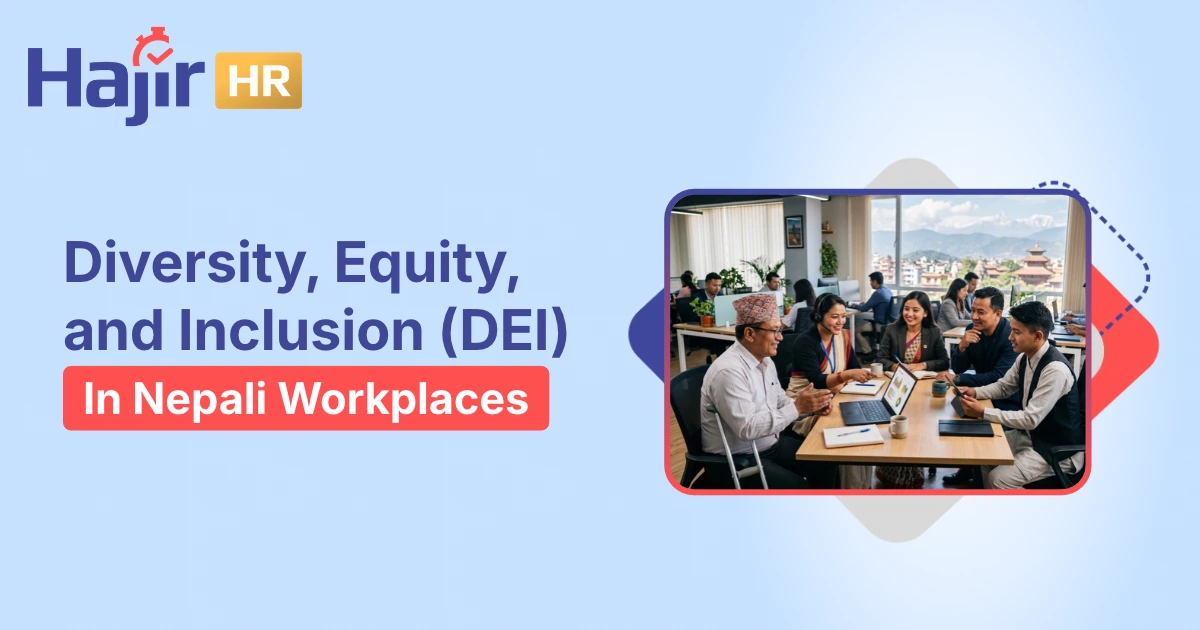
Leaders once viewed DEI as a nice-to-have. Today, they recognize its importance for talent retention, innovation, and long-term growth.The discussion now goes beyond representation, numbers, and statistics. It focuses more on power, access, and lived experiences within teams.This article explores these three pillars and their practical meaning. It explains why organizations must go beyond basic compliance.It also shows how organizations can build authentic DEI practices. These practices should create meaningful change instead of appearing performative.
Recent Post
The Current State of DEI in Nepal's Corporate Sector
In the last 10 years, the Nepalese workforce has become more urban, educated and globalized.Many local businesses still lack familiarity with the concept of DEI. Some multinational companies introduce formal DEI policies from their home countries. The banking, telecom, and NGO sectors have adopted DEI practices more quickly. They publish gender ratios and organize employee awareness sessions.
However, traditional hierarchies and limited HR support challenge manufacturing and family-run businesses. Women have increased their presence in entry-level positions across many workplaces. However, men still hold most senior leadership positions. Caste, ethnicity, and regional origin can also influence recruitment practices. Many organizations rarely discuss these factors openly during recruitment. This lack of transparency can make workplace diversity harder to assess. Younger Nepalis, particularly those who studied or worked overseas, also desire companies to step in and fill those gaps. The changing mindset is eroding even conservative institutions’ previous notions of who is deserving of what jobs.
Understanding the concept of Diversity, Equity and Inclusion
These three words are frequently combined but each has a different meaning. Diversity means difference in a specific context, including the differences of race, gender, age, ability, background, and thought. Equity is the equal treatment and opportunity for people who are starting from different positions, and may require varying levels of support to achieve the same result. Inclusion is a way of life characterized by feeling valued, heard and contributing fully when you are present.
Having a diverse talent is one thing, but not feeling safe speaking up is another.Having diverse talent is a thing, but not feeling safe speaking up is another. Likewise, equity discussions in work often involve challenging conversations about who gets what resources, who gets promoted, who gets mentored and who does not. These distinctions can help leaders steer clear of seeing DEI as one goal to achieve, and focus on it as three sets of commitments to be nurtured.
Why an Inclusive Workplace Culture Matters More Than Ever
Often business leaders wonder if this work has an impact on the bottom line and the evidence has grown to show that yes, it does. Diverse teams will be quicker in solving problems and in identifying blind spots that homogeneous teams will not see at all. Customers don’t overlook it, either; if a company is a reflection of the communities it serves, trust and loyalty are enhanced. There is a much more straightforward human side to all of this too. We spend a tremendous amount of time at work, and feeling left out sucks.
The turnover rate of marginalized employees is often higher, so budgets are subtly eroded as they are replaced and institutional knowledge is lost. When looking at offers, younger workers today are putting as much importance on workplace culture as they are on pay. Not adapting to this change is a disadvantage for companies in attracting and retaining qualified employees. An inclusive workplace culture is no longer an “extra” but is becoming the norm in almost all sectors and areas of the world.
Core Pillars of an Effective DEI Strategy
A meaningful DEI strategy rests on several consistent pillars and clear actions. First, leaders must hold themselves accountable for DEI progress. When leaders pass responsibility to others, momentum can quickly slow down. Second, organizations need reliable data to understand hiring, pay, and promotion patterns. This data helps leaders identify gaps and address them effectively. Third, organizations should review policies for potential bias. Job descriptions may discourage some candidates, while performance reviews may rely on subjective language. Fourth, employee resource groups provide spaces for connection, support, and advocacy. They work best when organizations provide meaningful resources instead of treating them as symbolic initiatives. Fifth, training should go beyond a single workshop. Organizations should make DEI part of everyday management discussions. When businesses apply these pillars consistently, each one strengthens the others. Businesses that treat DEI as an ongoing commitment can create more lasting results than one-time campaigns.
Understanding the culture and society of Nepal that influence DEI efforts
Western DEI models don’t necessarily address the unique dynamics that come from Nepal’s social fabric. While legally prohibited, caste discrimination is often manifested in subtle ways, such as in recruitment and selection, promotions, and de facto practices in the workplace. The diversity of ethnic groups found in both the hills, the Terai and the mountains makes that sometimes the language and the regional identity factor play a role in one’s comfort in an office. Traditional gender norms are still hindering women’s participation in leadership positions, even where they are equally competent.
Divides between urban and rural areas also are important because candidates from outside Kathmandu can sometimes be subject to unspoken prejudice in the recruitment process. There is particular underdevelopment in disability inclusion, where the majority of offices do not have basic physical accessibility and 45% do not have an inclusive policy in place. The scheduling of festivals and holidays may be influenced by religious diversity, but that is generally managed with tolerance. DEI strategies must take this multi-layered context into account and must be tailored to the social context in Nepal and not copied whole from the outside.
Common Challenges Organizations Face with DEI Implementation
Proper actions are often met with common hurdles. Resistance can manifest itself in a more subtle way, in the guise of arguments about merit or reverse discrimination, rather than resistance. In times of economic downturn, budget reductions tend to be the first to impact DEI initiatives, and this message is shown to employees, meaning that DEI was never a long-term goal. Even the act of measuring brings some challenges, as the representation numbers alone are not a measure of whether individuals feel included on a day-to-day basis.
But middle managers, which do the bulk of the work for shaping most of the days, are sometimes the least trained, and yet they bear the largest burden to shape culture. There’s also a danger of performative acts such as statements made during awareness months which do not lead to structural change. This imbalance is something that employees can easily pick up on and can lead to increased cynicism than if nothing had been discussed at all. With each of these difficulties, patience, self-assessment, and a readiness to change direction when it is clear that something isn’t working comes to mind.
When organizations start developing better inclusion practices, another priority related to inclusion often quickly emerges: the general welfare of employees. Whether people can thrive in an inclusive environment or not is influenced by physical and mental health support, flexible scheduling, and manageable workloads. Even with all the checkboxes checked, a workplace can be a massively addictive workplace if it’s not a well workplace.Even a workplace that has checked all the boxes can be a massively addictive workplace if it does not have wellness in the mix.
Well-being programs are now becoming a part of a company’s culture strategy instead of an HR initiative. This means access to mental health services, expectations to perform within realistic boundaries, and leadership that demonstrates healthy boundaries and isn’t always available. The two regions reinforce one another very well; people when they feel included are more likely to speak up before they become the danger of burnout. This area is still developing and will see well-being indicators become more commonplace in annual culture reporting along with traditional inclusion metrics.
Frequently Asked Questions (FAQ)
It means welcoming different people, treating them fairly, and making sure everyone feels genuinely included at work.
No, small businesses benefit just as much, since culture and fairness affect retention regardless of company size.
Meaningful change usually takes years, not months, since it involves shifting habits, policies, and daily behavior.
No, equity focuses on removing barriers so merit can be judged fairly, not on lowering standards.
Managers shape daily experience directly, making their training and buy-in essential to any lasting culture change.