Creating a Workplace Where People Genuinely Thrive
In today’s world, employee wellbeing in the workplace is one of the key issues that organizations are prioritizing. Businesses aren’t just assessing their success by sales or production. They are gaining insight into the importance of supporting, valuing and ensuring people are mentally at ease in order to perform at their best. An environment where employees’ emotional and physical needs are ignored will ultimately be costly with burnout, disaffection and attrition. But, companies that invest in the happiness of their employees tend to get more loyalty and creativity in return. This change is no fad, it’s a sign of a greater insight into how people work best.
Employees are motivated to attend work rather than just show up and do their jobs when they feel cared for. Creating a culture that is rooted in authentic care takes intentional action from leaders,communication and policies that show true care rather than fake it. The following sections delve deeper into some positive and meaningful actions that can be taken to foster a healthier and more balanced work environment for everyone.
Fast Onboarding
Secure Cloud-Based
Employee Self-Service

Recognition
Work-life Balance
Psychological Safety
Growth Opportunities
Why Employee Well-being at Work Matters More Than Ever
We’ve seen significant shifts in the way work is done over the last 10 years. The increased ability to work remotely, digital overload and constant connectivity have created a blurring of lines between home and work. Staff members are under increased stress, not fully aware of the impact on the mental health of themselves and others. Wellness programs in the workplace are no longer an optional extra to the business but are an integral part of the long-term sustainable business plan. The better an organisation is at providing mental health support, the less absent it is and the higher its engagement ratings. Psychological safety enables people to speak up, ask questions, share ideas, voice challenges, and offer feedback without fear of criticism.Psychological safety helps people communicate and work together better with others, without being afraid to voice their challenges, ask questions or share their ideas.
Identify the Core Elements of Workplace Wellness
Rather, true wellness at work is more than just occasional yoga classes or a free snack in the break room. It takes a comprehensive approach and is about emotional, physical, social and financial wellbeing. Staff must be financially secure, physically healthy and emotionally supported to be able to provide a consistent level of service. Fair workloads, open communication, and personal growth opportunities are additional characteristics of a strong workplace wellness culture. When these factors are combined, workers feel secure, and it has a positive effect on their productivity and creativity.
Mental Health Support Systems
Supporting employees’ mental health has become a major focus of employee wellness programs. Businesses are rolling out mental health support programs, ‘mental health days’ and stress management training. The resources aim to assist employees to debrief with issues without feeling alone or judged. Leaders who talk openly about mental health, make it normal to get support, not shaming. This cultural change fosters employees to take action on problems early on before they become severe burnout or chronic stress.
Measurement of Physical health and Ergonomic considerations
The importance of physical health is not to be forgotten either, particularly in the era of desk jobs. Prolonged sitting, sitting in front of screens, and lack of activity is associated with chronic health issues. Genuinely caring about employee health is a sign of an employer who is investing in ergonomic furniture, standing desks and wellness stipends. You may also find it helpful to break up your time with short movements throughout the day that can help you to stay more energized and focused. Some changes can make a world of difference in your overall energy and concentration.
Work-Life Balance as a Foundation
The key to a successful wellness program is work-life balance. Workers who are never able to get away from their work cannot get a good rest. Flexible schedules, work from home opportunities, and giving yourself boundaries for personal time all help to create healthier boundaries. If the managers set these boundaries for themselves, it allows workers to feel more “permitted” to disconnect after work. This balance will, in the long run, not compromise the performance, but enhance it.
The Role of Leadership in Employee Well-being at Work
Every day, employees’ feeling of safety and support is influenced by leadership behavior. Regularly checking in on a manager, listening and responding with empathy creates more trust. Employees are much more apt to express feedback when they feel leadership is truly concerned with their feedback. It is important to teach training managers to identify signs of stress or burnout, a practice that many organizations do not do. Emotional intelligence leadership development initiatives can be linked to improved team morale.
Building Social Connection Within Teams
People are social animals and feeling alone at work can work silently against them. Interpersonal relationships are enhanced through team building, informal check-ins and group projects. Staff who “feel connected” are more satisfied and have reduced stress overall. Others feel seen and appreciated within their teams with even the simplest of gestures such as publicly acknowledging achievement. It is often the case that when times are tough, employees can rely on strong social connections for support, which is sometimes completely invisible.
Financial Wellness Programs and Their Impact
When there’s financial stress it can have an impact on work performance, even when the worker is trying not to be affected. These financial literacy programs, retirement planning support, and clear career compensation helps alleviate this burden. Staff who have a good financial sense are more likely to focus on tasks andtask managementand feel less stressed during the day. Financial wellness is now a part of an employer’s comprehensive benefits package in some companies. This addition represents a greater understanding of the things that really impact employee stability.
Measuring the Success of Wellness Initiatives
It is important for organisations to continually evaluate their wellness program’s effectiveness. Compared toemployee surveys, engagement metrics, and turnover rates, they provide much insight into the impact of the program. Staff have the opportunity to provide honest feedback through anonymous feedback channels. Regularly checking this information enables leadership to continue to fine-tune their practice and take steps to fill the gaps. Continuous improvement is a way to keep wellness programs relevant and not stale, outdated programs.
Understanding how Company Culture Impacts Employee Retention in the Long-Term
In addition to formal wellness initiatives, the attitude of an organisation can make or break their engagement after only a few months or over a number of years. Culture is not established with policy documents or handbooks, it is created as part of day-to-day interactions. If trust, fairness, and recognition are ingrained in the day to day of your business, then your employees will feel real loyalty toward your business! The cultural fit is often the greater factor than salary in determining whether or not people stay on for the long-term.
Frequently Asked Questions (FAQ)
It encompasses mental, physical, social and financial well-being and equitable workloads and leadership approaches.
Balanced employees are more apt to concentrate, work together, and stay healthy in their absence due to burnout.
These types of flexibility, open communication, and small gesture recognition systems don't cost a fortune and are great ways for small businesses to begin.
Yes, workers with healthy boundaries can have a more consistent energy and creativity over long periods of time.
Quarterly or bi-annual program review is beneficial to ensure that the program or programs remain responsive to changing employee needs and feedback.
Trusted by 1600+ Organisations
Why to Choose Hajir?
Efficiently manage payroll, leave, and communication to streamline
HR processes and enhance employee satisfaction.
HR processes and enhance employee satisfaction.
Cost Effective Solution
Automates manual processes, saving businesses on administrative costs and resources.
Cloud-Based Accessibility
Access your data anytime, anywhere—perfect for remote and hybrid work environments.
Customizable Features
Adaptable to your business needs, with features like shift scheduling, WPS compliance, and custom reporting.
User-Friendly Interface
Designed for simplicity, ensuring a smooth experience for both HR teams and employees.
Data Security & Compliance
Robust security measures protect sensitive employee information, meeting regional compliance standards.
Quick Implementation
Hassle-free setup and onboarding process that gets your HR operations up and running in no time.
Scalability
Whether for small businesses or large enterprises, it can scale to meet the needs of any organization.
Boost Employee Productivity
With automated processes and real-time updates, Hajir helps you focus on what matters most—growing your business
12h/6d Customer Support
Dedicated support ensures that your HR operations run without a hitch.
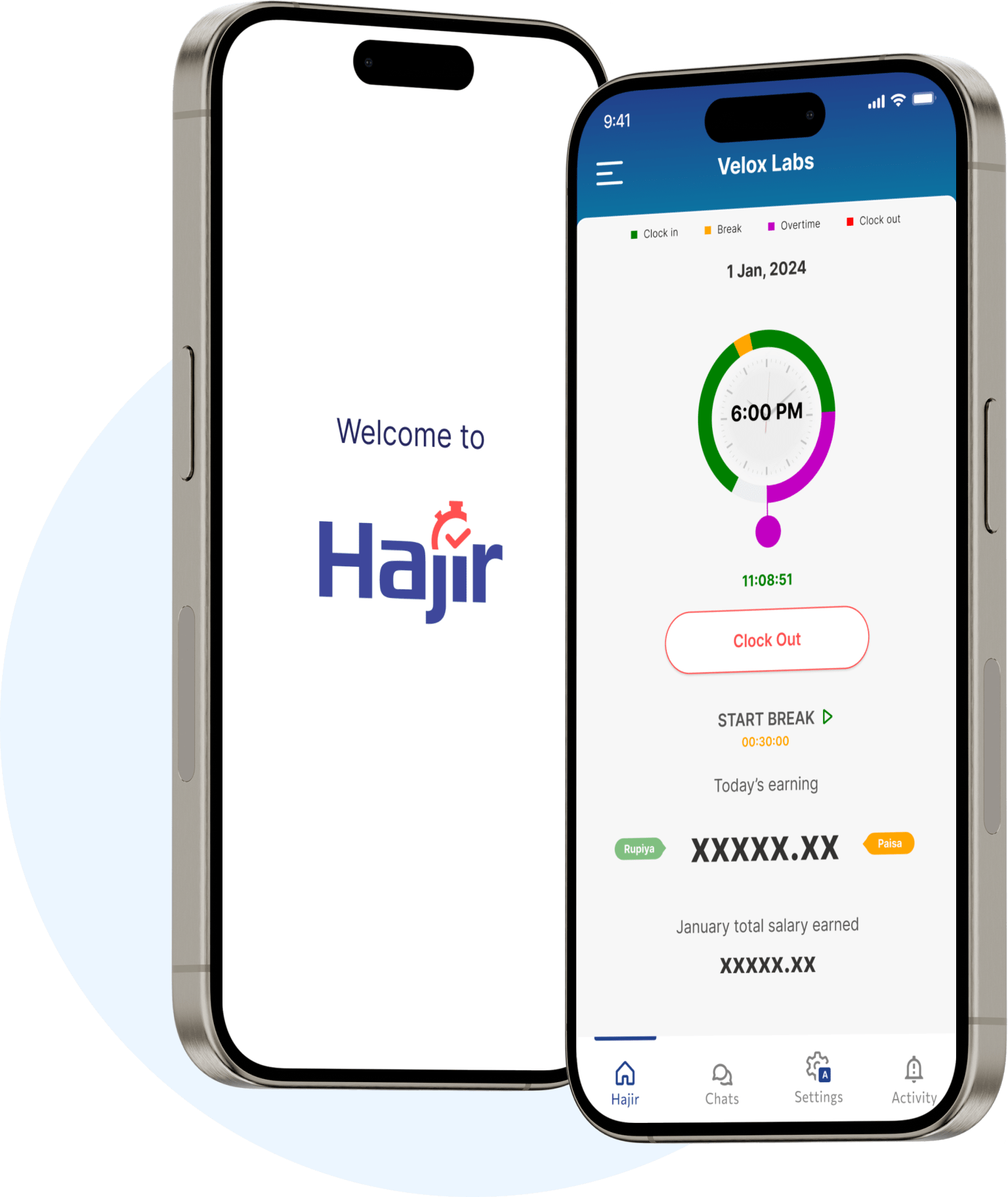
Download the App and Get Started
Get the app from Play Store and App Store