How an HR System Transforms the Way Modern Teams Manage People
An HR System is a system that assists companies to handle people, payroll together with compliance from a single organized location. Spreadsheets are a great solution for small businesses, but as companies get larger and more complex, they fall short. Files are duplicated, records disappear and basic inquiries take hours to respond to. HR teams then lose more time in chasing paperwork than assisting the employees. A modernHuman Resource Management System (HRM) flips that trend on its head. It integrates hiring, attendance, leave, payroll and performance data into a single secure platform.
Fast Onboarding
Secure Cloud-Based
Employee Self-Service
TDS: Monthly Tax

PF: Retirement fund
SSF: 31% of basic salary
HajirHR: Auto payroll
Managers have instant access to accurate information, while employees can deal with common requests independently. This transition is time saving, reduces error and increases trust throughout the workplace. For small businesses, selecting the appropriate HR software isn’t a luxury anymore. It is now a must-have for small and mid-sized companies to remain competitive and compliant. That need has only grown as more and more people are working remotely or in hybrid settings. In this section, you will get to know what an HR System does and what are the essential components of an HR System. You will also find out how to select one wisely and what some of the common mistakes are.
What Is an HR System?
An HR System is a computer-based application that streamlines and integrates all the manual HR functions that a human resource department performs in a day. It keeps employee information, records attendance, calculates wages and facilitates hiring. It is also known as anHRMSor HRIS in many instances, but with a few variations in features. The basic concept remains the same in all places. All information relating to people is stored in a single database. Each department is then provided with the same up-to-date and correct information. The cloud-based ones are another plus. Records can be accessed securely from any device and place by teams. Updates are done live so no one has to deal with stale files.
Core Features of a Reliable HR System
Every platform doesn’t have the same tools. The following characteristics are the backbone of a reliable solution.
Employee Database and Records Management
The main component of any HR System is a central database. It contains contracts, personal information, job histories and other significant documents. Role based access ensures that sensitive information is always only available for the right people. The first step in good employee management is trustworthy records.
Payroll Automation
The most manual of tasks in HR is the payroll process, which is eliminated inpayroll automation. Salary, taxes, bonuses and deductions are automatically calculated. It directly connects with attendance and leave data. Employees are on time to receive payslips, each month. Less manual entry also translates to fewer expensive corrections.
Recruitment and Onboarding
It becomes faster to hire when job postings, applications and interviews are all done in a single portal. Applicants move through all the stages without the need to change tools. Onboarding tasks begin automatically on acceptance. New employees fill out paperwork and undergo training prior to their first day. That was a smooth start that gets the engagement and retention going early on.
Talent Management and Performance Reviews
Talent management tools make it easier for managers to create objectives and provide frequent feedback. Review cycles are on time, no need for multiple reminders on email. Performance results are paired with skills and training history. Leaders can then identify high performers and make appropriate career progression decisions.
Employee Self-Service
Employee self-service portals provide workers with control over routine tasks. They are able to apply for leave, update information and download payslips. Less repetitive requests are received by HR teams. Staff are more self-assured and knowledgeable.
HR Analytics and Reporting
HR analytics is not merely a process of data collection, but also a means of converting data into meaning. Turnover, absenteeism, faster hiring, payroll costs are displayed on dashboards. It is possible for the decision makers to identify trends before they become troublesome. Instead of guesswork, data-driven planning lets you go with a clear plan.
How an HR System Manages PF, SSF, and TDS in Nepal
Manual payroll is most likely to get it wrong in statutory deductions. An incorrect percentage could lead to penalties and employee disgruntlement. An efficient HR System automatically uses the appropriate rules each month.
What is PF and what does it do?
Provident Fund, commonly known as PF, is a retirement saving plan which is a savings plan of both employer and employee contribution. In the earlier EPF scenario, both sides made a contribution of 10 per cent of basic salaries. The money accumulates to a long-term balance for the employee. Since then, in Nepal, the social security fund has largely taken the place of it for covered employers.
What is SSF and how does it work?
The SSF orsocial security fund is Nepalese contribution-based social protection program. 31 percent of basic pay is the total contribution. The employee pays 11 percent and the employer pays 20 percent. Shares are only based on basic salary and not gross pay. With minimal wages NPR 50 000, for instance, it is NPR 55 000 from the employee. The employer pays NPR 10,000 separately. This is deposited in one lump sum every month, normally on the 15th of the next Nepali month. In exchange, employees receive medical, accident, dependent family and old-age pension benefits.
What is tds and how does it work?
TDS stands for Tax Deducted at Source. Employers withhold income tax from employees’ salaries and deposit it with the government. The employer calculates TDS based on the employee’s projected annual taxable income. The applicable Finance Act determines the relevant tax slabs. Employees can lower their taxable income through approved retirement contributions, including Social Security Fund (SSF) contributions. Additionally, employees who join SSF receive an exemption from the 1 percent social security tax. However, tax rates and related rules can change each year. Therefore, employers and employees should confirm the latest requirements with the Inland Revenue Department.
How HajirHR manages PF, SSF & TDS?
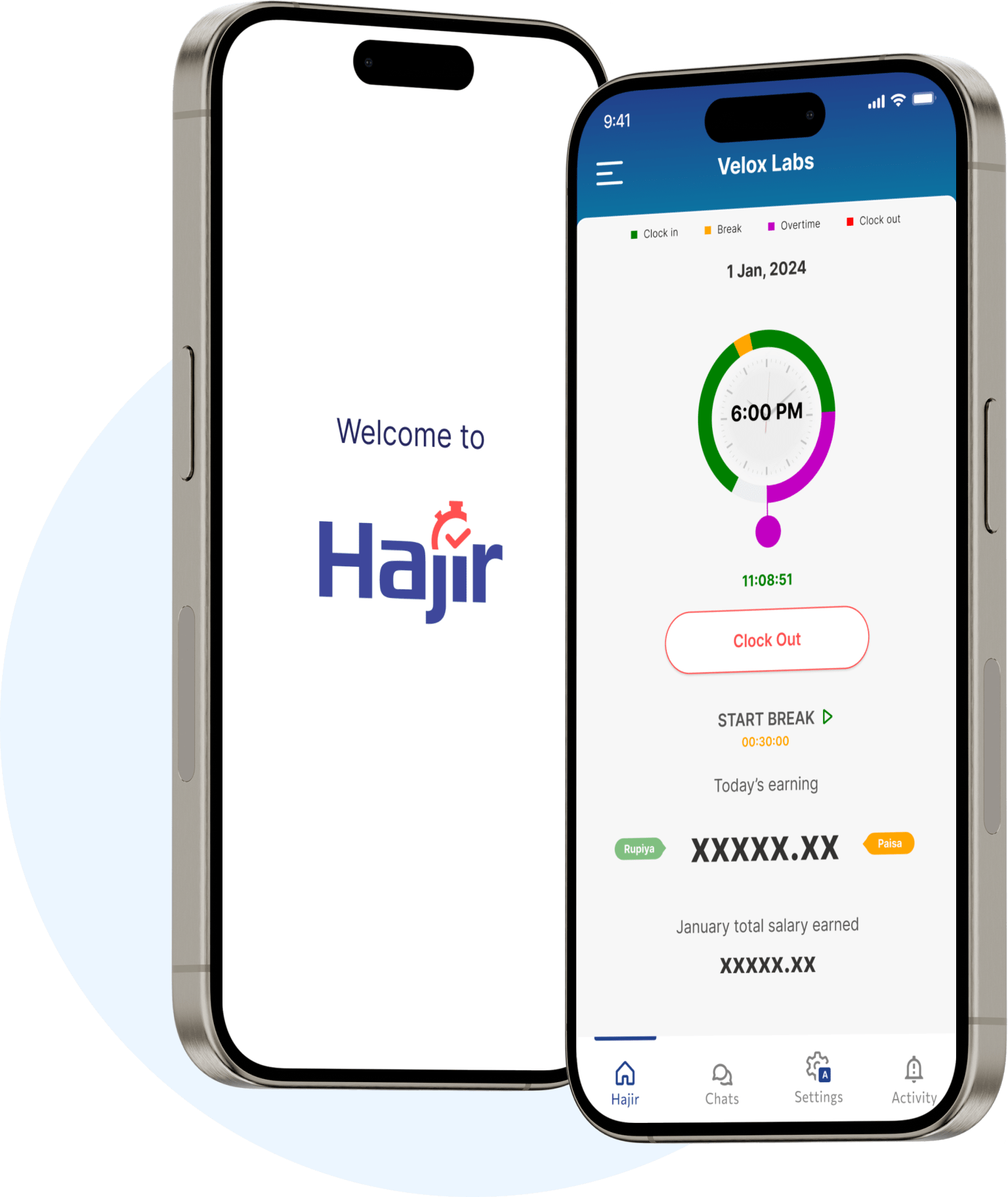
HajirHR is acloud-based HR System designed specifically for all Nepali businesses and trusted by more than 1,600 businesses. It has a dedicated function for TDS, SSF, PF, CIT and insurance in its payroll functionality. The process in action.
HR establishes payroll policies, payroll components, allowances, and statutory settings. Then, the attendance and leave data are fed in from the time-tracking module. Leave deductions & overtime directly feed into salary calculation. The system will also compute pay, PF contributions, SSF contribution, and calculate TDS. HR checks the results and the approvals are sent to payroll before payroll is finalized. Last but not least, workers get payslips which outline all of the deductions clearly.
Reports like tds projection andcalculation of payroll tax details are also provided by HajirHR. These include support for audits, deposits monthly and filing taxes at the end of the year. The platform promises 99.99 percent accuracy with payroll and free data migration smooths the transition from spreadsheets.
Business Benefits of Using an HR System
It is the time savings that are first of all important. Automation automates repetitive tasks in minutes, not days. HR professionals can then concentrate on culture, engagement and strategy. There is also some improvement in accuracy. Handwritten data introduces errors, impacting pay and compliance. An HR System mitigates the risks using validation rules and audit trail. Compliance also is made easier to maintain.Labor laws are subject to constant change and the software keeps track of contracts, leave policies and statutory deadlines. Cost control is also improved. Improved headcount and payroll visibility helps to make better budgets. Last, there is an improvement in employee experience. Responsive answers and clear processes foster trust in the organization.
Selecting the HR software that is suitable for the business.
Begin by making a list of your true needs. This is because the needs of a ten-person start-up will differ from those of a five-hundred-person manufacturer. Before watching a demo, list the features that you need. Then, test and see how it performs at higher levels of service. Your HR software should add to your locations, teams, and regulations. Integration matters too. It should be linked with accounting, attendance devices, andcommunicationdevices. Review security carefully.
Search for data privacy policies that are clear, regular backups, and encryption. Compliance at the local level is also given equal weight. Verify the presence and up-to-date construction of PF, SSF and TDS rules. The user-friendliness also counts. An interface that is confusing will be rejected by the employees. Get a trial and truly engage users. Last but not least, check the quality of support and cost. The value can be quickly lost due to hidden charges and poor training.
Common Mistakes to Avoid During Implementation
In many companies, the decision is rushed and without taking multiple stakeholders into consideration. This should be evaluated with the involvement of HR, finance and IT. One of the other errors is data transfer failure. Old Spreadsheets tend to have duplicates and out-of-date entries. Wash them prior to importation of any food. Some teams don’t do training either. People who don’t know how to use a great HR System mean that it can’t do its work. Do a few short sessions, share simple reference materials. Another risk is not adhering to statutory changes. Select the vendor which updates PF, SSF and TDS rules timely. Finally, don’t switch on all the features at the same time. Install the essential modules first, and add on as needed.
How HR Analytics, within an HR system, can help in the reduction of employee turnover.
Good employees costing and disruption! Our next topic is on Understanding howHR Analytics can show the signs of trouble early. You will learn which metrics are important, and what you should do with them.
Frequently Asked Questions (FAQ)
An HR System is software that handles the management of records, salaries, attendance, employment and job performance in a single platform. It decreases manual effort and maintains accurate records.
The payroll software simply works out and pays wages. The HR System includes payroll and recruitment, onboarding, leaves, performance and reporting. It provides full coverage of the workforce.
It applies an 11 percent rate to each employee's basic salary, and a 20 percent rate to the employer's payroll. The amount is deducted from the employee's pay. This then displays how much it would cost for the monthly deposit.
It is an approximation of the taxable income for the year, the applicable tax slabs and then splitting that tax between the monthly payrolls. Deductions, like SSF contributions, lessen the amount of taxable income. The figures are confirmed using reports.
Yes. HajirHR's payroll module features all the TDS, SSF, PF, CIT & insurance components. It also has TDS projection and payroll tax reports.
The standard price is typically based on the quantity of employees required and the modules you choose. The majority of vendors are paid on a per-user basis, per month. Be sure to inquire about set-up costs, training fees, and support fees.
Good companies employ encryption, security and regular backups. Never sign a contract without checking their security and privacy policy.
Trusted by 1600+ Organisations
Why to Choose Hajir?
Efficiently manage payroll, leave, and communication to streamline
HR processes and enhance employee satisfaction.
HR processes and enhance employee satisfaction.
Cost Effective Solution
Automates manual processes, saving businesses on administrative costs and resources.
Cloud-Based Accessibility
Access your data anytime, anywhere—perfect for remote and hybrid work environments.
Customizable Features
Adaptable to your business needs, with features like shift scheduling, WPS compliance, and custom reporting.
User-Friendly Interface
Designed for simplicity, ensuring a smooth experience for both HR teams and employees.
Data Security & Compliance
Robust security measures protect sensitive employee information, meeting regional compliance standards.
Quick Implementation
Hassle-free setup and onboarding process that gets your HR operations up and running in no time.
Scalability
Whether for small businesses or large enterprises, it can scale to meet the needs of any organization.
Boost Employee Productivity
With automated processes and real-time updates, Hajir helps you focus on what matters most—growing your business
12h/6d Customer Support
Dedicated support ensures that your HR operations run without a hitch.
Download the App and Get Started
Get the app from Play Store and App Store