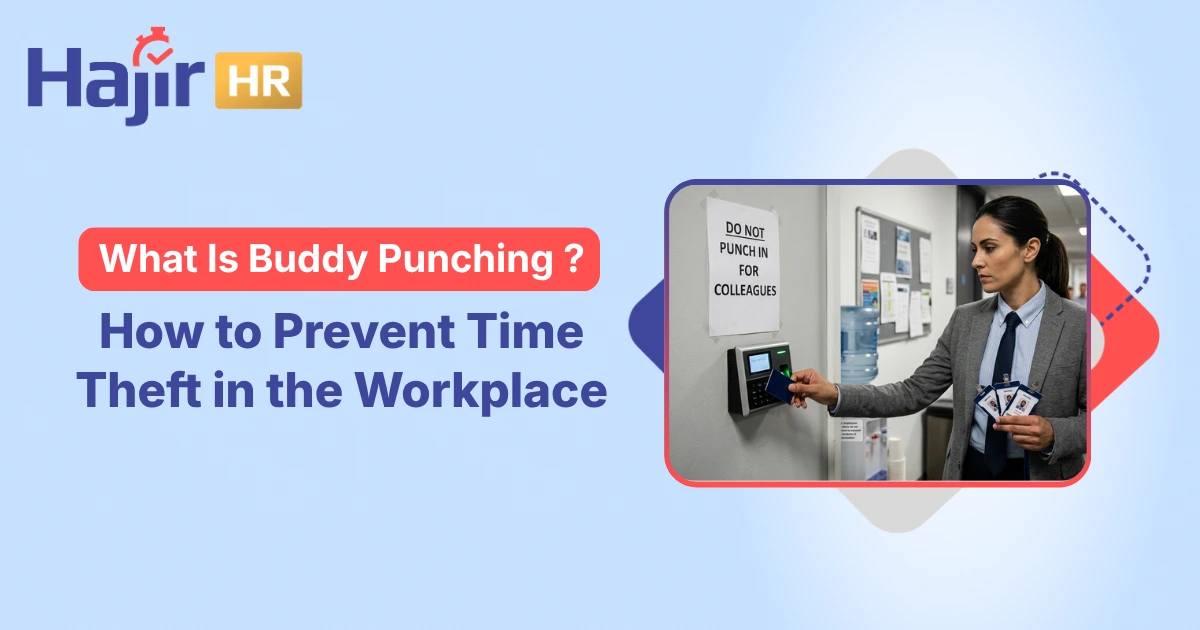
What Is Buddy Punching? How to Prevent Time Theft in the Workplace
Buddy punching occurs when an employee logs in or out for a co-worker who is late for work, missing, or just not showing up.This is why the company pays for hours for people who didn’t work, which is why it is called “time theft”. This seemingly innocent act of favoritism between peers costs the organization money in payroll and misleads attendance numbers by the organizations of all sizes.
This article covers what buddy punching is, why it happens, its impact on workplace productivity, and how businesses can eliminate it with integrated HR software that streamlines attendance tracking, payroll, and leave management.
What Does "Buddy Punching" Mean?
The practice of an employee punching another employee’s time sheet for them while the other employee is not working is known as “buddy punching.” That is, a “buddy” takes attendance for another worker by swiping a card, signing a sheet or entering a PIN.
Buddy Punching Meaning and How It Works
It’s a type of attendance fraud that involves a breach of trust to manipulate time records. Typically, it happens in a few common ways:
- A coworker punches in early for a friend who is running late.
- An employee is taking off for another employee who has already departed.
- A teammate takes the place of another teammate by using a shared badge or login.
Manual time clocks and paper time sheets are not very effective in protecting against this kind of manipulation. This makes it easier for dishonest employees to take advantage of antiquated systems.
Why Employees Do It
Buddy punching is most commonly a result of not wanting to be disciplined rather than a malicious act. In some cases, for example, a worker may want to have a friend punch in for them if they are running late, as a courtesy to them.
Likewise, team loyalty can be a factor; if a friend is working, they may feel a responsibility to help a friend rather than report their lateness. However, whether it’s intended or not, the result is the same: false attendance logs and excessive payroll costs.
Buddy Punching Examples
Learning real-world examples of buddy punching can help HR identify the issue early on. The following scenarios are all examples of this:
- The Late Arrival Cover-Up: A retail employee is 20 minutes late to work, so a co-worker keys in their badge on time to cover for them.
- The Early Exit Trick: A warehouse employee goes off for a personal appointment, while her friend logs out at the end of the day.
- Sick Day Swap: An employee is ill and another employee records them as being present to prevent their pay being deducted.
- Shared Login Scheme:If the office is digital, someone logs in as another employee, to sign them in.
Common Causes of Buddy Punching
There are a number of reasons that are the root of buddy punching in the workplace. Understanding these causes is the first step to develop an effective preventive measure.
Paper Timesheets and Basic Swipe Attendance: No identity verification and anyone can clock someone in.
Insufficient Supervision:In larger facilities, or multiple shifts, managers cannot be at every entry point, allowing for a chance of fraud.
Poor Corporate Culture: If accountability isn’t emphasized at work, then it’s okay to steal a few minutes here and there.
The Remote and Hybrid Work Problems: When you don’t have a physical office, it’s harder to ensure that the right people are working online, particularly when location andGPS tracking isn’t available.
Peer Influence and Loyalty:There can be pressure for staff to avoid trouble with their peers, even if this involves breaking the rules.
How to Prevent Buddy Punching in the Workplace
Luckily, buddy punching is 100 percent preventable if the right technology, policy and culture is in place.
Invest in Biometric and Smart Attendance Technology
Abiometric attendance solution helps to establish identity by physical characteristics and makes it hard for one staff member to clock in for another. In particular, companies can employ:
- Scanners that take a scan of the fingerprints and verify a unique fingerprint before time is logged.
- Facial recognition attendance systems that compare a real-time facial image to a database of employee facial images.
- GPS attendance solutions in which the employee is verified as being at the time of clock-in.
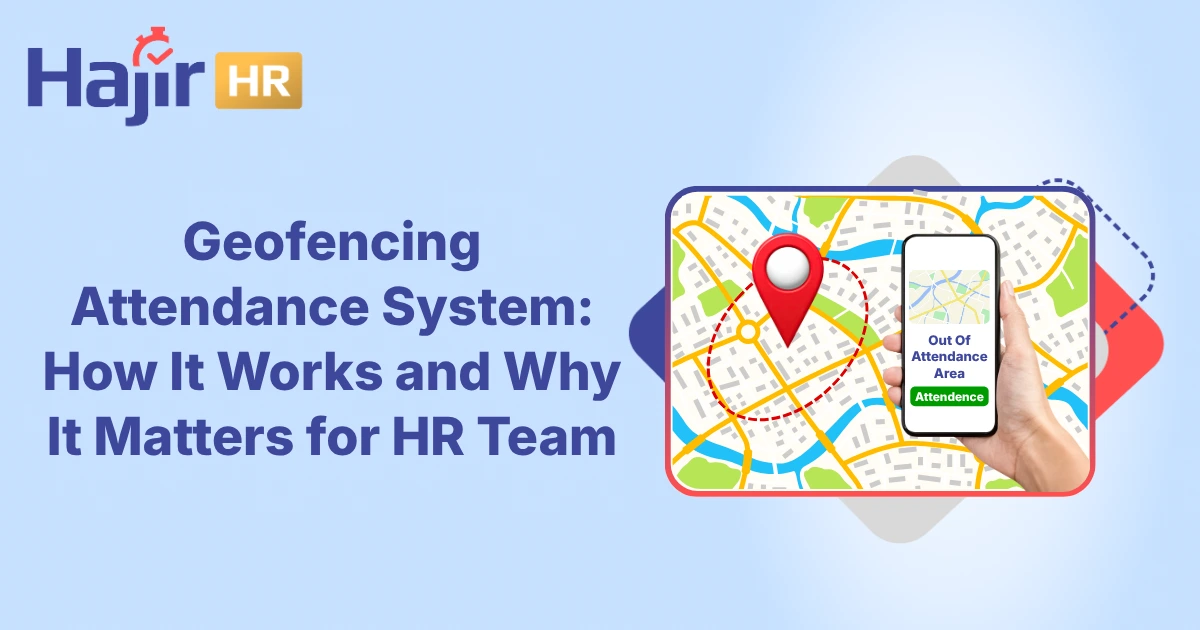
- Geofencing Attendance(restricts clock-in to be within a specified work distance).
- Attendance applications that work on mobile devices and include facial recognition and GPS for remote and field-based teams.
Conduct Regular Audits
Regular attendance checks will help identify irregular patterns, like employees all showing the same arrival time. Therefore HR teams can detect any discrepancies early, before it becomes expensive.
Hold Managers Accountable
Managers are vital to the enforcement of attendance policies. If supervisors are vigilant about attendance and intervene quickly when problems arise, employees will be unlikely to even try to punch in the first place.
Biometric attendance to prevent buddy punching, GPS attendance to prevent time theft, and good internal policies combine to form a formidable defence against fraud.
How Buddy Punching Leads to Time Theft
One of the most prevalent types of time theft is that of buddy punching and not only does it affect a few minutes on the timesheet, it can have a substantial impact on the employer.
Financial Losses
According to industry estimates, time theft costs U.S. businesses billions of dollars annually in unearned wages. Payroll can be one of the main operating costs, and so even minor inaccuracies have a huge impact on the bottom line.
Attendance Falsification
If attendance records are inaccurate, payroll calculations are vulnerable, causing overpayment, compliance problems and disputes.
Compliance Risk
Errors intime and attendance records can lead to significant issues when it comes time to audit, especially in industries with labor law regulations.
Lower Productivity
Workforce accountability is diminished, and productivity can suffer when workers know they can always count on a colleague to step in for them.
Attendance Time Sheet Problems
Over time, honesty problems with employees can result in diminished trust and employee morale. In the end, there’s more to employee time theft than just an impact on the bottom line; it impacts fairness in the entire organization.
Industries Most Affected by Buddy Punching
Buddy punching can happen anywhere, but some industries are at a greater risk because they have many employees and shift schedules.
- Manufacturing:Difficult to supervise due to multiple shifts and large factory floors.
- Hospitality: High turnover and fluctuating schedules create the opportunity to steal time at work.
- Retail Industry: It has high turnover rates of part-time and seasonal employees, which can lower accountability.
- Healthcare:Being required to work around the clock and staffing shortages can lead to pressure to cover for others.
- Construction:It is difficult to establish who is present in a job site.
- Logistics and Warehousing: This category is vulnerable particularly for large facilities that have multiple entry points.
- Education: Staff changes and flexible working hours may create the opportunity for attendance fraud.
The industries that depend on precise work time for payroll and compliance most greatly from modern attendance methods that are resistant to fraud.
How is Hajir HRM able to prevent Buddy Punching?
Hajir HRM is a totalHR software solution that helps to eliminate buddy punching and increase the accountability of the workforce. Instead of traditional manual methods, businesses can leverage Hajir HRM’s built-in features to monitor attendance precisely and automatically.
In particular, Hajir HRM encompasses:
- Fingerprint and Face Verification at clock-in using biometric integration.
- Real-time GPS attendance tracking.
- Geofencing features to allow only clock-ins at authorized work sites.
- Managing shifts more easily, across various locations.
- Payroll integration, making sure that verified attendance information is transferred directly to accurate pay calculations.
- Automated reports that save time for HR teams in hours of manual reconciliation.
Closing the Clock: Why Stopping Buddy Punching Starts Today
Ever wanted to get rid of buddy punching and secure your payroll? Discover Hajir HRM’s biometric attendance system, GPS attendance system, and all-in-one workforce management solution to create an accurate and trustworthy work environment.
Hajir HRM integrates these capabilities and becomes a complete attendance management system and workforce management solution, optimizing HR operations to shift from reactive fraud detection to proactive prevention.
Schedule a free demo today and get a head start on accurate attendance tracking withHajir HRM.
FAQ:
Buddy punching refers to when one employee punches in or out for a colleague who is absent, and that causes an inaccurate record of attendance and payroll.
While the laws are different in each region, buddy punching is generally considered a violation of company policy and can also be considered payroll fraud or timesheet fraud, which can have legal and financial implications for the employee and/or the employer.
Most of the time, employees buddy punch to prevent being penalized for being late or not showing up to work, or to feel good about helping a friend or coworker.
One of the most common types of employee time theft is still the buddy punch, especially in industries that require shift-based work schedules and have many entry points.
Buddy punching is prevented through the use of a biometric attendance system, GPS tracking, attendance policies, regular audits and consistent manager oversight.
Yes, a biometric attendance system can also be used to check the fingerprints or faces of employees so that it is very hard for others to clock in for them.
With GPS attendance, an employee's actual location is verified when they clock in, and they cannot be falsely marked as present from another site when they are working remotely or in the field.