Nepal’s #1 HR Software — Experience It Now!

How to Build a Sales Incentive Plan That Motivates Without Overspending
A good Sales Incentive Plan provides a positive incentive to the right kind of behavior and will help to manage your cost of sales. Businesses are either incentivizing them to do the work less, or paying them more to the point of reducing profits. Luxury and luxury are never for long. Salespeople are goal driven, reward focused, fairly rewarded, but they don’t like it if the rules are not very clear or fair. A sound scheme provides a connection between effort and earnings for each member of the team. It also provides leadership with a predictable budget, with a means to measure return.
Fast Onboarding
Secure Cloud-Based
Employee Self-Service
Track with Hajir HRM
Set clear goals
Pick smart commission
Protect your budget
In this era of newcompanies growing in Nepal very few are still doing calculation of incentive at month end in spreadsheets. This decreases the payouts, triggers arguments, and obscures what rewards are actually paying returns. What you really want to do is to design the structure, then attach the data. The following is a practical approach to how a goal relates to the structure, payout rules, and how a goal can be tracked. The goal is an energized “sales team” and a comfortable “finance team.”
Why Incentive Design Matters for Sales Team Motivation
The place to put in services for which you see results and measure the influence reflects the unusual nature of sales jobs. All reps know their numbers and all reps compare their numbers to others. Once sales are motivated by rewards that seem earned, and seem predictable, the team will want them. A motivated sales team is made by rewarding the sales which seem earned, and seem predictable.
Outcomes that are poorly-defined lead to mistrust among top performers and a lack of motivation among average performers. Managerial challenges to justify the cost result when the incentives are too high. Between these two risks lies good design. It views pay as a means to influence behaviour as opposed to simply as a payoff for past performance. Prior to picking any number(s), determine which behavior you would like to occur more frequently.
Set Clear Goals Before You Design Your Sales Incentive Plan
Begin at the end with the business objective you want. This may be new business, increased value of order, improved collection times or improved customer retention. Reward varies per goal! Teams looking to acquire new accounts have different targets than teams who are maintaining their accounts. Have two to three measurable goals in the plan. Beyond that confuses and imprisons focus.
Develop objectives based on past performance and market growth assumption. If it is too easy, it’s a waste of money. It is impossible to kill morale in weeks when the targets are impossible. Provide targets in writing no one will be surprised at payout time. If everyone isn’t able to articulate how their contribution translates to profit, then a Sales Incentive Plan simply doesn’t work.
Choose the Right Sales Commission Structure
The plan’s engine is your sales commission plans. Flat commission – a percentage of each sale that is paid. Simple; but favorable, when it comes to bargain, as well. The percentage will increase the more that reps perform at higher levels, or levels of tiers. It promotes stretching without excessive costs at the lower level. Base + commission means that the base salary is fixed and there’s a bonus that could fluctuate. Commission based on your margins means that you’ll earn money according to the profit and you won’t be getting much discounted. The majority of small and moderate size businesses can get away with just a base salary and varying commission plus a bonus at the end of every quarter. The formula shouldn’t be too long to explain in a minute.
Set Payout Rules That Protect Your Budget
It is generally not scores that are generous, but the rules by which payout can be done that get lax.When you’re overspending it’s likely it’s due to a lax payout rule, not a generous rate. Close huge business deals – don’t let a “windfall” bust the budget. Pay inversion only if it got collected as opposed to paid out. Explain the impact of returns, canceled purchases and discounts on each type of return. Add Claw back provision if sales are reversed within a certain time frame. Practice the cost before a launch, at nominal, high and optimum performance. Include statutory items, as well. Changes to incentives in Nepal can impact contributions andtax deductions of SSFs, make sure to verify the treatment with your finance advisor.
Balance Individual and Team Rewards
People are motivated to work if they are compensated for their energies. Team incentives promote sharing leads and assisting new employees. Generally a blend of sorts is best. For instance, eighty percent of your targets are on the team and twenty percent are on the individual level. So doing part of the job with aids like non-cash recognition helps too. Permitting public acknowledgment or additional leave days and learning experiences come to little cost. They also demonstrate that, at the company, there are more chips on the table than chips on the board. Check out these extras every quarter to see if folks value them.
Track Performance-Based Pay Accurately With Hajir HRM
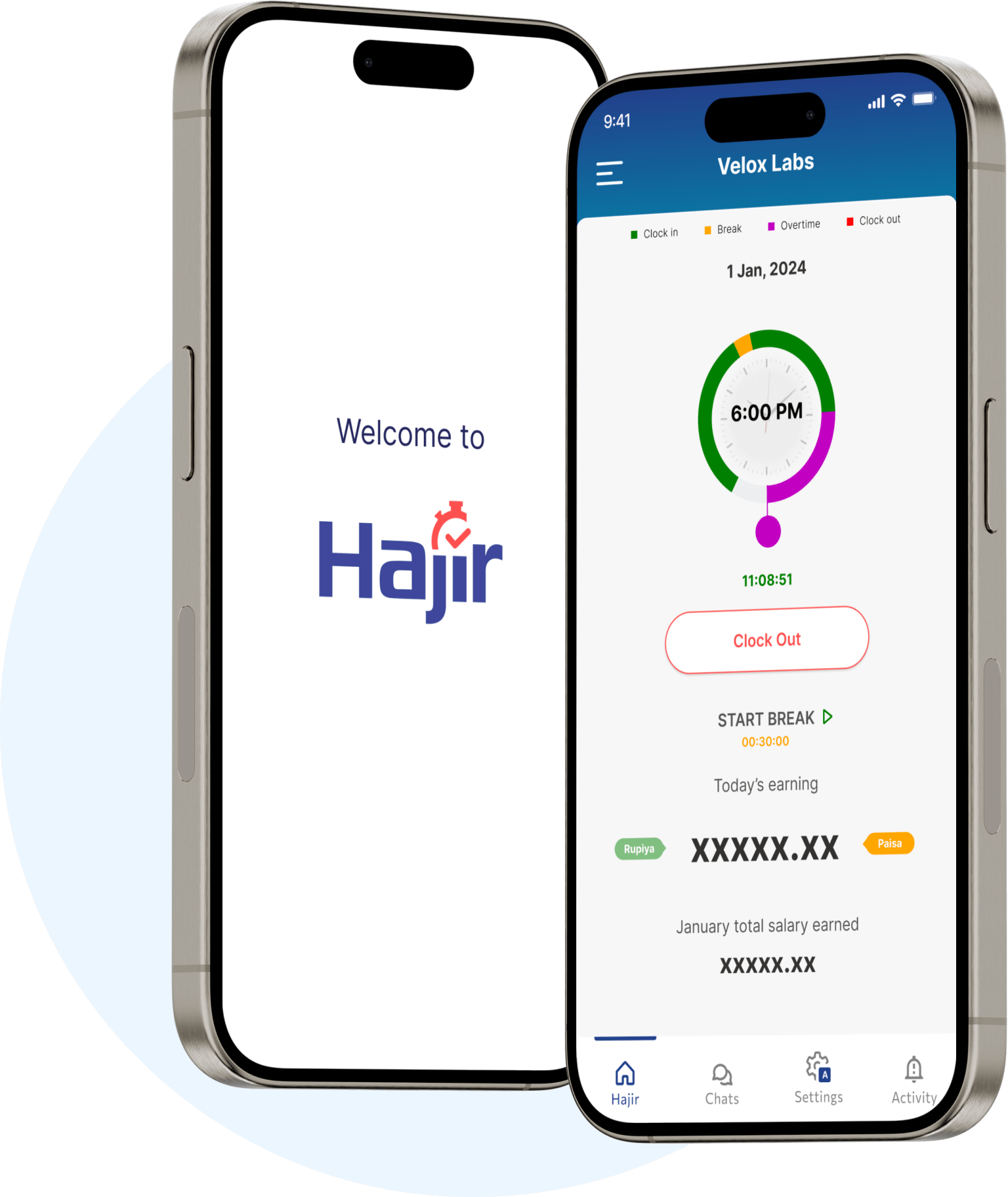
No matter how clever the plan, it simply will not work out if it is slow and prone to error. Growth in headcount or multiplication of targets and/or deductions causes spreadsheets to fail. Hajir HRM enables integration of attendance, performance andpayroll records for Nepal business. The integration of sales staff attendance, leave, and salary data makes the incentive calculation quicker and cleaner. The rules can be approved uniformly by HR and full payroll impact visible before approval by finance. Managers have a clear picture of individuals achieving targets. Transparency and timely payments are made to employees, fostering trust in the plan.Hajir HRM also maintains records for audits and SSF / Tax compliance. To sum up, the system makes plan design a reliable monthly process. In turn, teams will be able to devote more resources to coaching instead of reconciling numbers.
Review and Refine Every Quarter
A very few plans are perfect on day one. Checks results quarterly. Review number of reps targeting and the money costs and goals moved. Targets should not be so low if nearly everybody is working at top, maximum, or levels of attainment. If you have almost no one who meets the criteria, it’s set too high. Gather comments from the sales team and sales representatives. Only change two or three times a year, not monthly. Unexpected changes adversely affect trust, and each compensation is like throwing a dart.
Frequently Asked Questions (FAQ)
Sales Incentive Plan is a design that equates objectives with rewards and that is written. All these rewards may involve monetary commission, bonuses, rewards, or recognition.
Some companies allocate incentives as a percentage of sales or gross margin. Compare the numbers to your own margins. Avoid overspending the number of available resources.
Payments on a monthly cycle work best for shorter sales cycles and maintain motivation. Quarterly payouts are geared towards longer cycles and less paperwork. Decide on a one schedule and follow it.
Revenue is straightforward and is best for growth oriented teams. Profit reward drives up margins and presets discounting tendency. Several companies have a mix of both.
Hajir HRM offers you the comprehensive attendance, payroll and performance data, all in one place. This simplifies the audit process and ensures consistency and speed of incentive calculations.
Trusted by 1,600+ Organisations
Why Choose Hajir?
Efficiently manage payroll, leave, and communication to streamline
HR processes and enhance employee satisfaction.
Cost Effective Solution
Automates manual HR and payroll work for NPR 100 per employee a month, cutting administrative time and cost.
Cloud-Based Accessibility
Access your data anytime, anywhere—perfect for remote and hybrid work environments.
Customizable Features
Adaptable to your business, with configurable shift scheduling, leave and payroll policies, and custom reports.
User-Friendly Interface
Designed for simplicity, ensuring a smooth experience for both HR teams and employees.
Data Security & Compliance
Role-based access protects employee data, and Nepal’s SSF, PF, CIT and TDS rules are built into payroll.
Quick Implementation
Hassle-free setup and onboarding process that gets your HR operations up and running in no time.
Scalability
Whether for small businesses or large enterprises, it can scale to meet the needs of any organization.
Boost Employee Productivity
With automated processes and real-time updates, Hajir helps you focus on what matters most: growing your business.
12h/6d Customer Support
Dedicated support ensures that your HR operations run without a hitch.
Download the App and Get Started
Get the app from Play Store and App Store