Nepal Labour Law Updates 2082: What HR Managers need to know right now
This year, Nepal Labour Law 2082 is influencing the way each and every private employer of the country treats people. Labour regulation is a dynamic process in Nepal and does not stagnate for long. The government continues to give directives, the regulator issues circulars and there are enforcement drives. HR managers are likely to be told about changes when a change is reported by an inspector or when an employee complains. This can be expensive both in terms of finances and staff trust.
Fast Onboarding
Secure Cloud-Based
Employee Self-Service
Timely SSF deposits
Written contracts
Digital records
Fair overtime pay
The basic legislation of private sector employment continues to be theLabour Act 2074 and the Labour Rules 2075. The following two documents outline the conditions of contracts, hours, leave, termination and workplace safety. The rules change each year in the extent that they are enforced. The MLESS has intensified its efforts on providing correct appointment letters and just overtime rates in 2082. Regulators also have been urging institutions to adopt the prevailing labour law rather than the informal practices.
This change is important forHR managers, because it gives them a better understanding of how to manage their personnel. If the person doesn’t have a contract or the overtime is not recorded, it’s now a formal complaint. Staff members have increased knowledge about their rights compared to 5 years ago. Labour offices are also more responsive in responding to workers’ grievances. Lack of detail can escalate into disagreements that consume a lot of management time.
What Nepal Labour Law 2082 Means for Your Workforce
Employers should give written appointment letters to all employees. The letter should include the position, salary, benefits and type of work. There are various types of workers, including regular, time bound, task based, casual and part time. People have varying rights in each category and labelling is significant.
A maximum of six months probation is allowed as per the Labour Act 2074. It can’t be extended without limit by the employer in order to not be a permanent worker. Once the employee has finished probation the employee should get a clear confirmation. Numerous problems start when an employee has gone for years without a proper letter.
Extra attention should also be paid to outsourced and/or contracted employees. Recently, security guards, office assistants and frontline workers are stepping into the limelight. Labour authorities have called for minimum wage and service benefits for them to be guaranteed by institutions. If you’re employing through a manpower agency, make sure they also are fulfilling the obligations.
Nepal Labour Law 2082 Compliance Checklist for Working Hours and Leave
A normal working day is 8 hours and 48 hours is the normal working week. At least one day of weekly rest is to be given to employees. Overtime is any work performed outside of the regular work week. Extra pay will be provided at the rate of one and one-half times the regular rate.
There are limits to overtime, too. The Act sets limits on the number of additional hours an employee is allowed to work within the day and/or week. You should never get verbal approval from employers. Properly documented and precise time records safeguard everyone involved.
Leave entitlements should also be managed carefully. Home leave, sick leave and public holiday are paid to employees. Maternity andpaternity leave are given to women and men, respectively. Other special provisions apply also, such as mourning leave.
It is not hard to not know these rules! The challenge is getting them used to applying them to dozens or hundreds of employees. When leaves are carried over from year to year, spreadsheets rapidly start to fall apart. An employee could get cut short due to a simple formula error, and no one will even know.
Social Security is now a major aspect ofpayroll compliance. Employers enlist monthly for their staff. Staff also make a contribution (from their basic pay). The funds are deposited to the fund in time, (combined contribution).
Happypunters are the employees who are happy because of timely deposit and penalties are created due to late deposition. If basic salaries are not correct, it leads to greater issues. If the base amount is incorrect, then all the deductions following this incorrect amount are also incorrect. Thus, tax and contribution calculations need to remain in sync with the salary structure.
The SSF compliance is placed as an integral part of the contract and leave provision in Nepal Labour Law 2082. It is important that HR and finance teams discuss the contribution workflow together. The general rule is that it’s okay if there’s some drift as long as it’s done every 3 months.
Record Keeping That Stands Up to an Inspection
The greatest weapon in your armoury when it comes to a labour audit is the documentation. Typical documents requested by the inspectors include appointment letters, attendance register, payroll and leave records. They can also request overtime authorizations and reimbursements for contributions. These papers are thrown on the floor, the audit turns into a stressful ordeal.
The first step is to have accurate employee attendance records. Theovertime, leave and salary are all dependent on them over time. Paper registers can be easily tampered with and are difficult to check. Timestamps of digital records are much more reliable.
Retention is also important. Maintain employee and yearly contracts and payroll paperwork. Any file should be able to be retrieved in minutes. This routine can take the majority of the anxiety out of inspections.
How Hajir HRM help you in complying with the standards
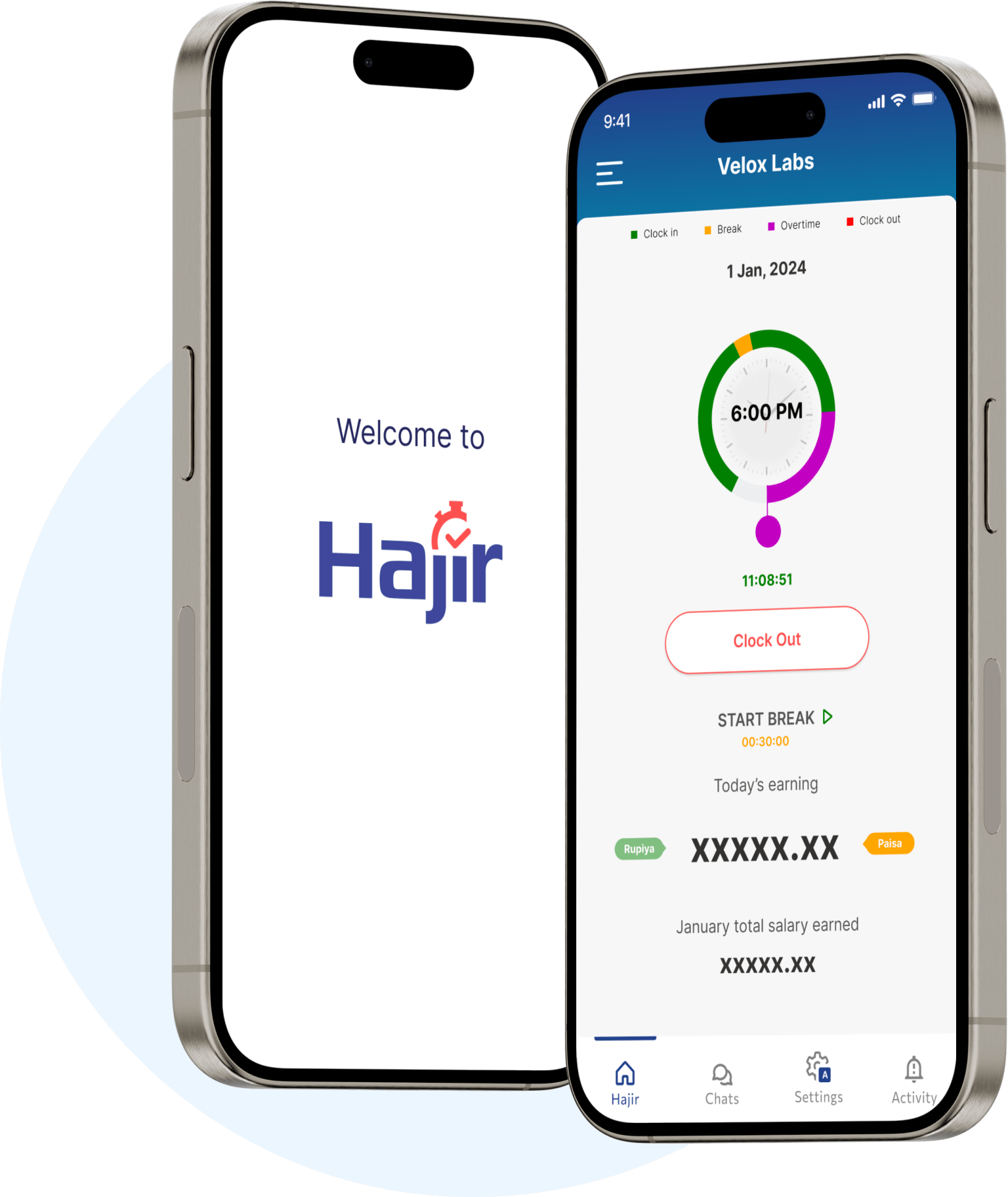
Manual compliance only works up until your team grows. Next, the job load increases at a rate quicker than your employees.Hajir HRM is designed for those businesses who are under such pressure in Nepal. It integrates all attendance, leave, payroll and statutory deductions into one system.
The platform is able to reliably mark attendance times. Leave balances are automatically updated by default as per your policy. Overtime hours are seamlessly added to payroll without any re-entries. There are less mismatches in thecalculation of SSF and tax figures, since they are based on the same data with regards to salaries.
HR managers also get instant reports to audit and management reviews. You don’t need to look through folders, you can export what an inspector needs. This will save you time and demonstrate your organisation’s commitment to compliance. It is an effective measure to implement Nepal Labour Law 2082 in real life.
Frequently Asked Questions (FAQ)
It is the labour laws that will be applicable to the private employers in Nepal for the FY 2082/83. The basic legislations are Labour Act, 2074 and Labour Rules, 2075. All private companies with workers are required to meet the standards.
Yes. Employers should have a written appointment letter which includes the role, salary and employment status. This safeguards both the employer and employee in case there is a disagreement.
Workers earn overtime pay at 1½ times the regular pay rate. Employers also need to abide by the law on extra hours. It is imperative that there be written approvals and proper attendance records.
According to the provisions of the Labour Act 2074, probation term is limited to six months. Thereafter, the employee will be confirmed in writing.
If an employee is enrolled under the SSF, the employer will not need to have a separate provident fund and a gratuity arrangement. Employers are responsible for checking their enrolment status with the Social Security Fund and the contributions in line.
Maintain attendance, appointment, payroll and leave records, and receipts of contributions organised. With a digital HR system like Hajir HRM, this retrieval is a lot quicker.
Trusted by 1600+ Organisations
Why to Choose Hajir?
Efficiently manage payroll, leave, and communication to streamline
HR processes and enhance employee satisfaction.
HR processes and enhance employee satisfaction.
Cost Effective Solution
Automates manual processes, saving businesses on administrative costs and resources.
Cloud-Based Accessibility
Access your data anytime, anywhere—perfect for remote and hybrid work environments.
Customizable Features
Adaptable to your business needs, with features like shift scheduling, WPS compliance, and custom reporting.
User-Friendly Interface
Designed for simplicity, ensuring a smooth experience for both HR teams and employees.
Data Security & Compliance
Robust security measures protect sensitive employee information, meeting regional compliance standards.
Quick Implementation
Hassle-free setup and onboarding process that gets your HR operations up and running in no time.
Scalability
Whether for small businesses or large enterprises, it can scale to meet the needs of any organization.
Boost Employee Productivity
With automated processes and real-time updates, Hajir helps you focus on what matters most—growing your business
12h/6d Customer Support
Dedicated support ensures that your HR operations run without a hitch.
Download the App and Get Started
Get the app from Play Store and App Store