Remote Workforce Management: Smart Strategies for Success
Remote workforce management has become a significant component of business success in the contemporary digital world. It entails successful leadership, support, and monitoring of the employees working in different locations. Organizations need to implement a system that can optimize productivity, simplify communication, and make the performance of different teams consistent.
Businesses that embrace digital tools and emerging HR technologies have the ability to overcome the distance, time zone and isolation barriers to form connected and high-performing teams. A remote workforce, when handled correctly, can be one of the strongest assets that will lead to business growth in the long term.
What is Remote Workforce Management?
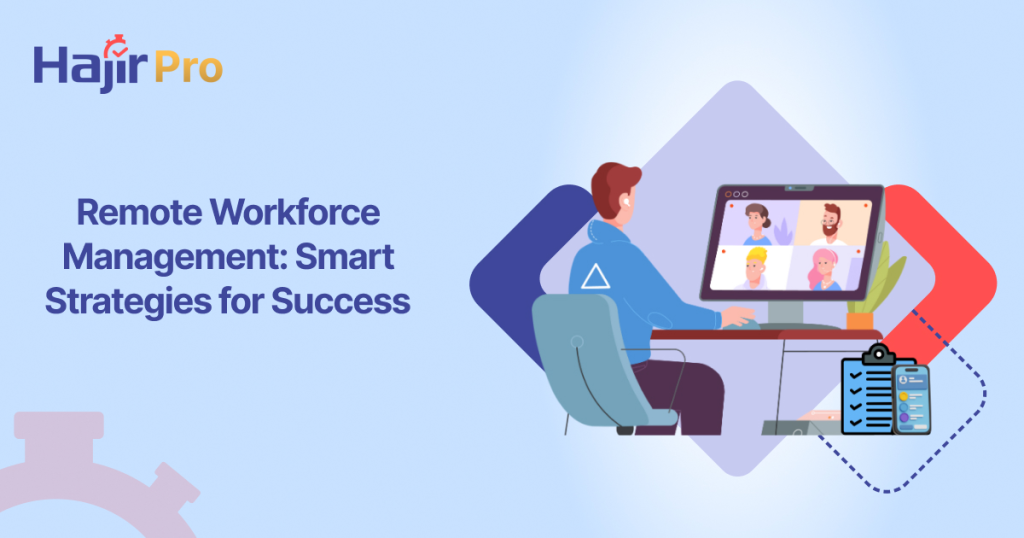
Remote workforce management refers to the process of managing, supervising, and assisting employees working in separate locations away from the conventional workplace. This includes implementing specific approaches and technologies aimed at facilitating communication, productivity, and employee performance tracking.
Given the popularity of hybrid and remote models of working, it has become a critical issue for any organization nowadays.
The Challenges of Remote Workforce Management
Remote workforce management presents unique problems that may not always be solved through traditional management approaches. Some of the main challenges are:
Communication Issues
Remote configurations may create misunderstandings, delays, and lack of cooperation as long as they are not handled in the right way.
Absence of Visibility
Managers have a problem in measuring the employee engagementor productivity when the employees are not there in person.
Isolation of the Employee
When the employees work for the company remotely, they might feel that they are not part of the group or the company culture.
Time Zone Differences
When it comes to global teams, the efficiency of the workflow might be affected due to the coordination issues between the different time zones.
To overcome these issues, one should have good leadership, an organized workflow, and an appropriate technology solution. The systems should be more interactive, connective and transparent to allow businesses to do their operations remotely.
Smart Strategies for Effective Remote Workforce Management
Hajir HRM is a specialized HR platform suitable for schools and educational institutions. It is also user-friendly in its HR management since it automates the HR processes, such as attendance and payroll systems.
1. Implement Open Communication Channels
Remote workforce management relies on effective communication. Encourage frequent check-ins, team meetings and virtual meetings in order to keep everyone in the team on track with the organizational goals. Managers are also expected to provide an open culture where employees are free to provide updates or seek clarification.
2. Set Clear Objectives and Performance Metrics
Remote teams are better with quantifiable and observable goals. Companies are expected to focus more on the results and performance as opposed to the number of hours worked. This goal-focused approach does not only improve accountability but also allows the employees to operate individually and be productive.
3. Encourage Teamwork and Interaction
Teamwork and employee engagement are the keys to success even in remote settings. Managers should boost morale by coming up with virtual team-building activities, brainstorming, and recognition programs. Employee trust in remote teams increases productivity and decreases turnover. Regular communication and inclusion of all in the company helps in building a company culture and keeping employees motivated and attached.
4. Enhance Performance with Technology
Management of a remote workforce is possible with the implementation of various modern technologies. They help to improve daily operations, such as attendance tracking and performance tracking. Cloud services can also be used to allow workers to access work-related data anywhere safely. HR management systems, real-time reporting tools, and task automation should be invested in by businesses to ensure the visibility and efficiency of all remote operations.
5. Ensure Work-Life Balance
One of the basic pitfalls of remote work is burnout due to the lack of boundaries between personal and professional life. The flexibility of work schedules and the possibility to observe the downtime can also contribute significantly to the well-being of employees. Organizations should also promote a culture of mental health, where they show support through wellness programs and checking in.
How HajirHR Simplifies Remote Workforce Management
Hajir HRM is a cloud-based HR management solutionthat is modern and designed to enable businesses to manage remote and hybrid teams effectively. It introduces automation, precision, and transparency to the processes of the workforce, and remote management becomes convenient and easy.
Hajir HRM helps manage remote workers effectively in the following ways:
Automated Attendance Tracking
Records the attendance of employees in real time minimizing errors and allowing the HR managers to have accurate records.
Performance Monitoring Tools
Provide information on employee activities, which can enable the HR managers to comprehend work patterns and engagement along with team dynamics to make appropriate decisions.
Efficient Communication and Transparency
Promotes effective communication among teams through group and individual chats. This helps make everyone aware and focused on achieving the goals of the company.
Shift and Schedule Management
Enables the creation and management of flexible work schedules that can be used by remote work teams, hybrid work teams, and multi-time-zone work teams.
Payroll and Reporting Integration
Connects attendance, leave and performance information to automate payroll.This also helps to create correct reports in a short period of time.
Cloud-Based Access
The feature will enable employees and HR managers to use HR tools regardless of the place and at any time, which will guarantee continuity in the work.
Smart Notifications and Alerts
Enables the HR managers to deliver instant notifications, updates, and announcements to alert. This helps to keep the employees informed and responsive.
Event Management
Enables scheduling and organizing of the company’s events, such as the training processes or workshops and recording of the certifications in the records of employees once they have been finished.
Stand Up and Prosper Feature
Allows employees to report daily progress and upcoming plans to become more accountable and transparent.
The Future of Remote Workforce Management
Management of remote workforce is not just about coordination, but rather trust, communication, and proper technology to facilitate teams. Through solutions such as Hajir HRM, organizations have the chance to automate operations, sustain productivity as well as facilitate better work-life balance amongst employees.
Companies that embrace formalized remote workforce management today are in a better position to remain competitive in a changing digital environment. Remote teams can be effective with appropriate systems and intelligent management practices that can guarantee stability in performance and sustainable growth.
Know more about HajirHR. Your All in one HR software.
Get started now!
Recent Post