Best Attendance Management System For Small Businesses in Nepal
Attendance management system for small businesses become essential when manual tracking starts slowing your operations. If any of these sound familiar, it’s a definite indication that your business is outgrowing spreadsheets and paper timesheets. A lot of business owners that begin using an automated system say that they just wish they had done it earlier.
Attendance management systemscan be used to reduce lost hours, missed timesheets, payroll mistakes and manual corrections that are tedious. You’ll no longer have to spend hours correcting attendance records, you can concentrate on expanding your business while making sure your employees are getting the right pay and on time
What Is an Attendance Management System for Small Businesses?
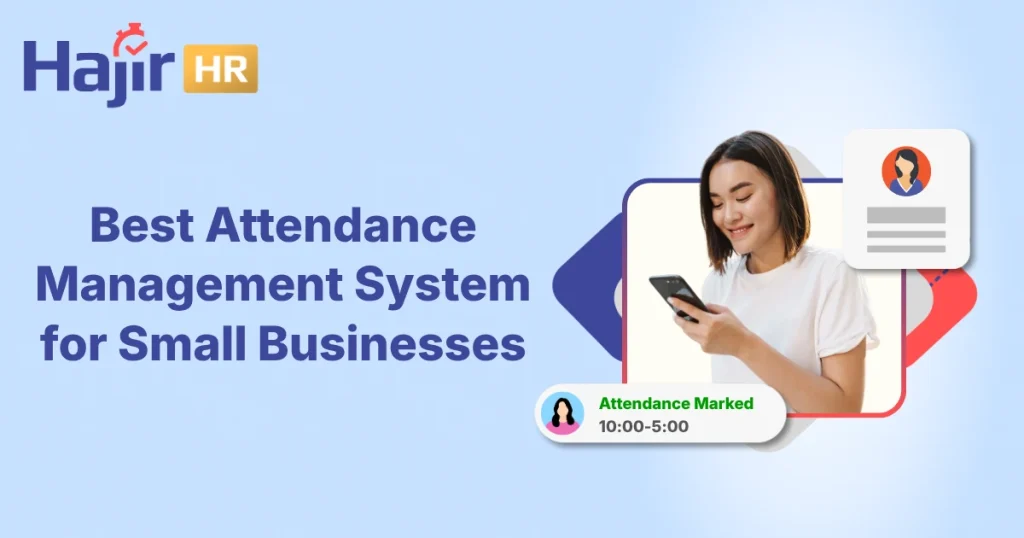
An attendance management system for small business is a software designed to record the start, break and end times of employees working at a small business. It eliminates the use of paper registers and manual spreadsheets, and provides a single source of truth.
How It Works
- Employees clock in and out via the mobile app, web portal or shared device
- The system automatically calculates hours, overtime and breaks
- Time records are reviewed and approved with a click by managers.
- Approved Hours are entered into payroll automatically without manual entry.
This eliminates the guess work, as opposed to manual tracking. For instance, a manager won’t have to piece together handwritten time sheets or make the chase for a late employee, or the employee will not have to question whether his hours were logged.
Put simply, attendance management software for small business converts the messy, disparate records into a single, up-to-the-minute, accurate picture of who worked, when, and how.
Why Small Businesses Need an Attendance Management System
If the business has three employees and one owner, thenattendance trackingis possible. Once the team gets larger than that, though, things get seriously difficult with manual tracking.
The Hidden Costs of Manual Tracking
- Payroll mistakes: One wrong entry could result in someone being paid for hours they did not clock in.
- Cutting hours: Buddy punching and clocked-in funds later
- Compliance risk: maintain proper records of hours, overtime and breaks per labor law.
- Cross checking timesheets with schedules consumes hours of HR time each pay cycle
An attendance management system for small businesses eliminates these issues at the root by automatically recording accurate data as it happens, instead of relying on someone to input it properly at a later time.
Signs Your Business Has Outgrown Manual Tracking
It is important to know the red flags before comparing tools. In general, a few patterns become repeating in a business until a point of tipping occurs:
- Each cycle is delayed in payroll due to hours not being synced between records.
- No one can verify actual hours worked, employees argue their salaries.
- Without walking the floor, or calling around, it is not possible for managers to determine who is clocked in or not.
- Messages and honor systems are used to facilitate remote or field staff attendance.
- The spreadsheet process becomes more difficult with new hires or new locations.
If two or more of these resonate with you, it is a good indicator that manual tracking is not for you, it’s for your business. The vast majority of owners who switch tell you that they wish they had done it months before.
Key Features to Look For in Attendance Management Software for Small Businesses
Not all attendance devices are appropriate for all small teams. Attendance Management for small businesses should be user-friendly and address actual issues rather than unnecessary complexities.
Real-Time Clock-In and Clock-Out
The ideal system requires no training and allows employees to clock in and out from a phone, browser or shared device. Thus front-line workers don’t hesitate to use it, but take it up straight away rather than bothering with a complex new procedure.
In addition, real-time data, as opposed to scheduled data, allows managers to see the employees that are currently working and not the ones scheduled.
GPS and Location Verification
Live location tracking verifies that field personnel are clocking in at their assigned location and that multiple branches are clocking in at the right location. For companies with employees working from various offices or remotely, this is especially important since the manager may not be able to monitor the employees’ presence in person.
Businesses not only minimise time theft, but they also feel confident that their attendance information is accurate.
Automated Overtime and Break Calculations
When it comes to manual overtime math, mistakes are common. Overtime and breaks are automatically computed based on the policies a business sets, and they are done the same way each time without anyone having to do the calculations manually.
Payroll Integration
An attendance system that integrates withsmall business payroll should seamlessly link hours to payroll, with no manual data entry required. It’s here where most of the time savings are realized.
- Running payroll is quicker with less reconciliation.
- Errors when reentering hours are much less likely.
- HR spends less time cross checking records with pay.
- Reports are created on hours and attendance trends in seconds.
Centralized Reporting
Lastly, a good system produces clear attendance, overtime and absence reports. So, managers have the visibility they require to make staffing plans, but without having to build data manually.
Also over time these reports can show patterns that are completely lost in spreadsheets, for example, overtime occurring most frequently on specific shifts, or clock-in occurring late on a specific shift multiple times in a row.
Attendance Management System vs. Manual Tracking at a Glance
The difference becomes clear once you place both approaches side by side.
Area | Manual Process | Digital System |
Clock-in method | Paper sheet or notebook | App, portal, or shared device |
Hour calculation | Done by hand, error-prone | Calculated automatically |
Location verification | Not possible | GPS or IP-based checks |
Payroll accuracy | Prone to reconciliation errors | Synced automatically |
Visibility | Managers ask around | Real-time dashboard |
Seen this way, the decision isn’t about technology preference. It’s about how much time and accuracy a business is willing to trade for sticking with an outdated process.
How Hajir HRM Supports Attendance Management for Small Businesses
Unlike many attendance tracking solutions that are add-on features, Hajir HRM embedsemployee attendance tracking into its core functionality. It is the solution for small and growing businesses in Nepal to replace paper registers and disconnected spreadsheets.
What This Looks Like Day to Day
- Attendance is taken through smartphone-based clock-in/clock-out, and it is real-time tracked.
- GPS tracking enables managers to see where remote and field workers are at all times.
- Biometric solutions enable accurate attendance recording in the office, when necessary.
- An integrated shift scheduling and overtime tracking feature enables managers to fairly schedule and keep track of overtime.
- Attendance data is linked to payroll and hours worked accurately feed into means of salary calculations.
- One central dashboard provides managers with a live view of attendance, leave and payroll.
How to Choose the Right Attendance Management System for Small Businesses
Choosing the right system involves making sure that you are getting out what you need to suit your business and not everything listed.
Before You Commit
- Record the number of people who work on your team, where they work, and how you pay them.
- Check that the system will be compatible with the devices your employees are using.
- Ensure that it is compatible with your existing payroll procedures, or replaces them entirely.
- Inquire about setup fees, data transfer costs and support fees for ongoing support.
During Rollout
- Educate the staff and train the managers on self-service options prior to go-live.
- Run a pilot for one full pay cycle with one team, and then switch everyone over to that team at that time.
- Take a careful look at early reports to catch configuration problems before running payroll.
- Have a definite cutoff date, don’t run old and new systems side by side
Common Mistakes to Avoid
- Selecting a system that is an ideal feature, but has never been tested for practical usability
- Failure to train employees and assuming the app will be self-explanatory
- Keeping the old paper or spreadsheet process as an option to revert to in case of issues.
- Waiting to integrate with payroll after the system has been deployed
An attendance management system for small businesses is a cost-effective solution as soon as it saves hours of manual calculations for each pay cycle.
Ready to Simplify Attendance Tracking?
End spreadsheet recon and missing punch time each pay period. Each month it goes on, your HR team wastes hours on paperwork and your payroll risks it.
Make a complimentaryHajir HRM Demo today and discover how to integrate clock-in/leave and payroll into one place for the small business.
FAQ:
It's an automated system that tracks employees' working hours as they clock in and out, take breaks, work overtime and more all on a single, accurate, real-time record, eliminating paper time sheets and spreadsheets.
Simple time tracking tools are those that record hours worked on a task or project. Attendance management software monitors who is on the job, enforces company attendance rules such as overtime/breaks, and syncs the data to payroll.
Yes. Teams of five and less typically do not experience any issues with disputes or payroll problems by not relying on memory or paper record-keeping, and the more members the team, the more time is saved.
Hajir HRM is a modern system that supports location tracking through GPS, enabling managers to check the attendance of employees who are not in a specific office.
Developing a simple setup for small teams can take a few days, with larger, multi-location businesses, policies may take a couple weeks to set up and staff trained.
A correct implementation transfers the current attendance and leave history to the new system, and thus keeps the managers and employees up-to-date and well-informed rather than having to start from scratch.
Know more about HajirHR. Your All in one HR software.
Get started now!
Recent Post