HR Management System in Nepal: Features, Benefits & How to Choose
An HR Management System has quietly become one of the most important decisions a growing business in Nepal makes. It’s not because it’s trendy, but because manually tracking attendance, payroll, and employee records simply stops working. This happens once a company crosses a certain size. If you’ve ever watched an HR team spend an entire week reconciling Excel sheets before payday, you already understand this. Or if you’ve seen a business get flagged for a compliance mismatch it didn’t even know it had, you understand too. Either way, you already know why this conversation matters.
Fast Onboarding
Secure Cloud-Based
Employee Self-Service

99.99% Payroll Accuracy
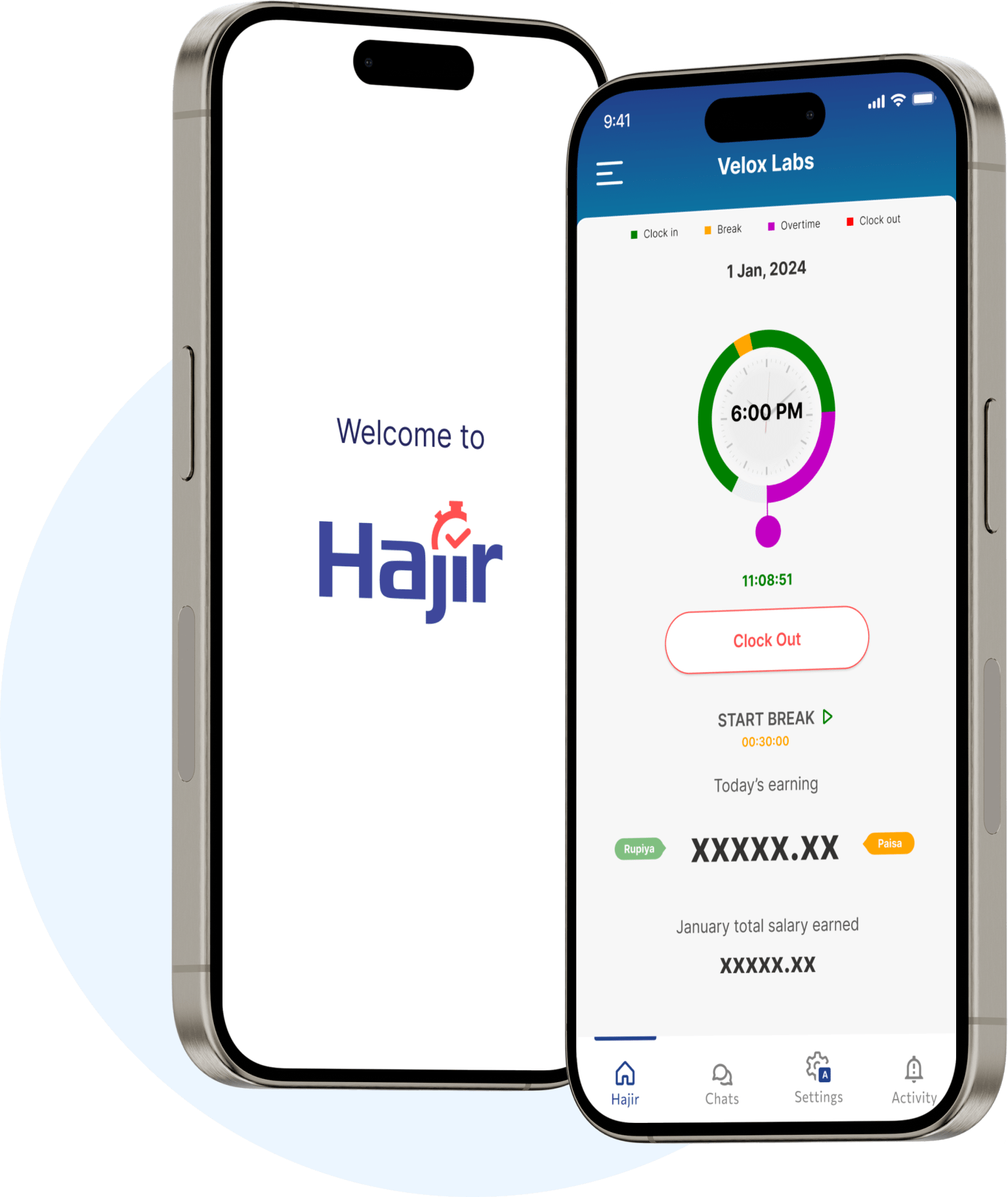
Pocket HRM
SSF. PF. CIT Compliance
Attendance
Nepal’s business landscape has changed a lot in the last few years.Digital payments, remote work, multi-branch operations, and stricter compliance enforcement from the Inland Revenue Department (IRD) have changed things. Together, these shifts have pushed HR out of the back office and into the spotlight. Yet a surprising number of businesses are still running HR the old way. This includes retail chains, hospitals, and educational institutions alike. Many still rely on spreadsheets, paper registers, or a patchwork of tools that don’t talk to each other.
What Is an HR Management System, and Why Does Nepal's Market Need Its Own Approach?
At its core, an HRM System is software that centralizes everything related to managingemployees attendance, leave, payroll, employee records, and reporting into a single platform instead of scattered spreadsheets and paper files.
What makes this different in Nepal is context. Payroll here isn’t just “salary minus tax.” It involves Social Security Fund (SSF) contributions, Provident Fund (PF), and Citizen Investment Trust (CIT) deductions. It also involves IRD-based tax slabs that shift with each fiscal year’s budget. A generic international HR tool is often built for a different country’s tax structure. This means it often can’t handle these calculations correctly out of the box. That’s exactly why locally built or locally adapted systems tend to serve Nepali businesses far better.
Why Businesses in Nepal Are Increasingly Adopting HR Management Systems
A few real shifts are driving this change, not just software marketing.
Multi-branch operations have become the norm, not the exception.Retail chains, restaurants, cooperatives, and educational institutions increasingly operate across multiple cities.Tracking attendance or payroll separately for each branch quickly becomes unmanageable.Without a centralized system, this problem only gets worse.
Compliance enforcement has tightened.IRD is placing more emphasis on accurate reporting and real-time data.Businesses relying on manual payroll calculations face a higher risk of costly errors.Miscalculated SSF contributions or missed filing deadlines aren’t just inconvenient they’re compliance risks.
Remote and hybrid work has entered the conversation, even in Nepal’s traditionally office-first work culture.Employees now expect to apply for leave from their phones.They also want to check payslips and mark attendance the same way.Paper registers simply can’t offer any of this.
Talent expectations have shifted.Younger employees entering Nepal’s workforce are used to digital-first systems in every part of life.Clunky manual HR processes stand out against that expectation.Over time, this can quietly affect how a company is perceived as an employer.
Key Features to Look for in an HR Management System in Nepal
Not every HR software marketed to Nepali businesses is actually built with Nepal’s realities in mind. Here’s what genuinely matters when evaluating one.
Localized payroll compliance should be non-negotiable. The system needs to correctly calculate SSF, PF, CIT, and IRD-based TDS deductions and ideally update automatically when tax rules change each fiscal year.
Offline functionality matters more here than in many other markets, given inconsistent internet connectivity in parts of Nepal. A system that keeps working locally and syncs once connectivity returns avoids the operational disruption of a full outage.
Multi-branch and multi-company management is essential for any business operating beyond a single location allowing centralized oversight while still keeping each branch’s data properly separated.
Biometric or GPS-based attendance tracking helps address a very real, very common problem: proxy attendance, where one employee marks attendance on behalf of another.
Employee self-service letting staff apply for leave, check payslips, and update details themselves significantly reduces the manual back-and-forth that eats up HR teams’ time.
Local language and support availability can matter more than it seems. A system with support available in Nepali, and a local team that understands Nepal’s regulatory environment, tends to resolve issues far faster than an international vendor operating across time zones.
Cloud-Based vs. On-Premise: What Actually Makes Sense for Nepal?
This is a genuine decision point, not just a technical detail.
Cloud-based systems are hosted online and accessed through a browser or app with no local servers to maintain, automatic updates, and access from anywhere. For most small and mid-sized Nepali businesses, this is the more practical choice, since it removes the burden of managing infrastructure and IT staff.
On-premise systems run on a business’s own servers, giving full control over data location, a consideration that matters more for larger institutions like banks or government-adjacent organizations with strict internal data policies. The trade-off is that the business itself becomes responsible for hosting, security, and maintenance.
For most growing businesses, especially those without a dedicated IT department, cloud-based HR Management Systems tend to offer a far better balance of cost, reliability, and ease of use.
Real Benefits Nepali Businesses See After Switching
Payroll that used to take days now takes hours. Automated calculations remove the manual back-and-forth of double-checking SSF, PF, and tax deductions by hand.
Fewer compliance headaches. When the system stays updated with current fiscal year rules, businesses spend far less time worrying about miscalculated statutory deductions.
Real-time visibility across branches. Leadership can see attendance, headcount, and payroll status across every location instantly, instead of waiting for individual branch managers to compile reports.
Better employee trust. Accurate, on-time payslips and transparentleave tracking quietly build trust between employees and management something manual systems often undermine through avoidable errors.
Common Challenges Businesses Face Without a Proper System
It’s worth being honest about what happens when businesses delay this decision.
Payroll errors become routine, not occasional and errors involving statutory deductions can create real compliance exposure with IRD.
HR teams burn out on repetitive manual work chasing paper leave forms, manually calculating overtime, and cross-checking attendance registers by hand.
Multi-branch businesses lose visibility. Without centralized data, the head office often only learns about staffing or attendance problems weeks after they’ve already caused damage.
Scaling becomes painful. What works for 15 employees on a spreadsheet becomes genuinely unmanageable at 100+ employees across multiple locations.
How to Choose the Right HR Management System in Nepal
Rather than starting with a feature checklist, start with your business’s actual pain points.
If payroll compliance is your biggest headache, prioritize systems with strong, actively updated SSF/PF/CIT/TDS calculations.If you operate across multiple branches, prioritize centralized multi-branch dashboards. Don’t get distracted by flashy extras you won’t actually use. If your team works in the field sales reps, delivery staff, service technicians the priorities shift.GPS-based attendance and mobile access matter more than on-site biometric hardware.
It’s also worth requesting a live demo rather than relying on a features list alone.Ask directly whether the vendor’s team understands Nepal’s specific compliance requirements.This single question tends to separate genuinely local-ready systems from generic software.Some tools carry a Nepal label attached without actually being built for it.
Where does that leave you?
Selecting an HR Management System in Nepal isn’t only a matter of digitizing documents.It’s about laying a groundwork that can truly keep up as compliance requirements grow.Employee needs and business intricacy also keep growing alongside that. Companies who are ahead of this curve spend a lot less time fighting fires with payroll issues.Instead, they spend a lot more time on the folks running their business day-to-day. If you’re a single-location team just beginning to feel the burden of manual processes, this applies to you.
It also applies if you’re a multi-location business struggling to keep up with disparate records. Either way, the right system should feel like busywork simply slipped off your team’s plate.It shouldn’t feel like just another new application to learn.
Frequently Asked Questions (FAQ)
There is a lot of variation in pricing but many are now catering to the needs of smaller and mid-sized businesses with options that may be per company, not per employee. Don't assume that just because it is expensive that it is not viable, but do do a little comparison shopping.
Yes, a properly-localized system should. One of the key things to be checked before selecting any HR Software is to ensure that it is able to compute Nepal-specific statutory deductions accurately as generic international HR Software might not be able to do so.
Even with small groups, there are definite advantages, especially when it comes to payroll accuracy and attendance tracking. It's really easy to see how valuable it is as the business expands but many small businesses take it up from the beginning to prevent redoing processes later.
Reliable providers have security measures (such as encryption and secure hosting) to ensure employee data is kept secure. Don't take anything for granted when it comes to data security; check with any vendor before you sign up.
This will vary depending on the size of business and complexity of the data, but many businesses are completed within days to a few weeks, especially when the vendor has a dedicated setup support.
That's why it's so important that this thing works offline. The systems that are developed taking into consideration the connectivity realities of Nepal enable local use even in the event of a loss of connectivity, with data automatically synchronizing when connectivity is restored.
Download the App and Get Started
Get the app from Play Store and App Store