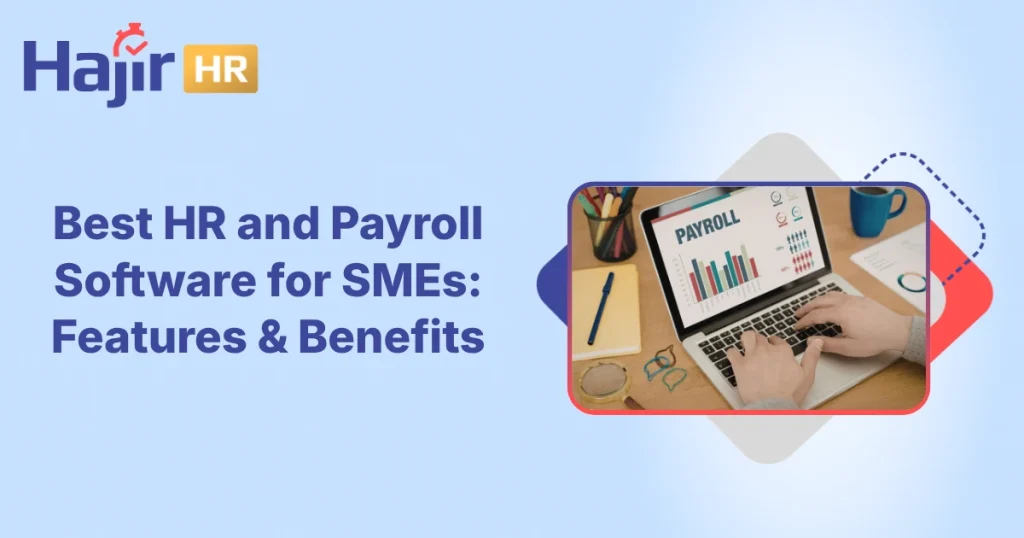
Best HR and Payroll Software for SMEs: Features & Benefits
HR and Payroll Software for SMEs supports small and medium enterprises to handle their staff members and process salaries while still complying with regulations without employing an enormous administrative staff. This means that business grows faster, has fewer mistakes and gets resources back into the business.
Whether you’re comparing global tools or searching forHR and Payroll Software in Nepalspecifically, this guide covers what the software does, why SMEs need it, and how to choose the right fit.
Manual HR systems are time-consuming and prone to errors, so more SMEs are transitioning to digital HR systems each year. Here are some things to keep in mind before you purchase.
What Is HR and Payroll Software for SMEs?
HR and Payroll Software for the SMEs integrates two vital functions of business, which are HR management and payroll software on a single platform. Businesses have one integrated system that allows them to take attendance, track the time worked, and process payroll, eliminating the need for manual re-entry of data.
For instance, upon an employee’s unpaid leave, the system automatically updates the payroll calculation. Likewise, when a new hire enters the organization, their information is entered into HR systems, tax records, and payroll systems. Most current platforms run on the cloud as well, and records are available to business owners from any place, significant for multi-location and remote teams.
Why SMEs Need Integrated HR and Payroll Software
Limited HR staff and tight budgets are the norm for SMEs. The solution is integrated platforms that merge several functions into a single subscription at a reasonable price.
Time and Cost Savings
- Automates overtime and balances and creates payslips.
- Opens up HR to recruit and train employees
- Saves additional payroll personnel or other systems costs
Improved Compliance
- Automatically adjusts tax and labor regulations.
- Automates statutory contributions (without manual entry)
- To prevent flagging payroll discrepancies before they become problems.
Key Features to Look for in HR and Payroll Software for SMEs
Different platforms have different capabilities and weaknesses will only be realized after a business invests in a vendor. Key attributes to look for before you sign.
Employee Database Management
All of the personal information, contracts, documents and job history are maintained within a central employee database. With all data stored in one record, HR departments can instantly retrieve any employee’s details without having to open folders or spreadsheets.
Attendance and Leave Tracking
Automated attendance records check-in, check-out, and working time using biometric systems, mobile apps, or online platforms. Leave management then automatically applies the company policy; calculates balances, approvals and carry-forwards without manual intervention from HR.
Employee Self-Service Portal
Anemployee self-service portal allows employees to view payslips, apply for leave, make changes to personal information and download tax documentation without having to rely on the employee for assistance. This means HR is spending a lot less time on mundane requests and a lot more on strategic tasks.
Onboarding and Offboarding
When a new hire is onboarded, Digital onboarding tools gather signatures, send policy documents, and automatically assign training tasks. Offboarding is the other side of the story as well – exit procedures, settlements and access removal are organized, documented processes.
Automated Payroll Processing
Attendance, leave, and salary structure are automatically used to calculate gross pay, deductions and net pay in the payroll engine. In addition, since the calculations are automated, businesses save on the inaccuracies that spreadsheet based payroll processing can cause.
Compliance with tax and statutory requirements.
There are a number of recurring issues with manual attendance tracking and this type of attendance software solves them all.
By automating attendance, businesses can avoid most of these problems by stopping them before they begin.
Buddy Punching, Time Theft, and Overtime Errors
The built-in calculation of taxes ensures that appropriate deductions, local tax obligations, and filing requirements are applied according to local tax laws. In addition, the system automatically syncs these rules with the laws as they change; business owners don’t have to keep an eye on changes in compliance.
Reporting and Analytics
Integrated reports provide finance and leadership teams with insights into payroll expenditure, staffing levels and attendance. This means decision makers have clean numbers at their fingertips without having to build a spreadsheet.
Benefits of Integrated HR and Payroll Software
- Centralized Data through accurate real-time reports on headcount, attrition and labour costs.
- Fewer Mistakes through automated calculations that replace manual work in spreadsheets that is prone to mistakes.
- Employees receive right payroll information on time without any delays (on-time payments).
- Access to payslips, tax and leave balance through a single portal, self-service.
- More trust from employees through transparency is the key to being trusted over time.
- Built-in scalability as the platform grows alongside your workforce, meaning that you invest only once.
- Reduced long-term expenses with no repeated migrations or system overhauls as you scale up.
How to Choose the Right HR and Payroll Software for SMEs
When looking for HR and Payroll Software for SMEs, it’s important to consider the pros and cons of each option so you don’t end up with more issues than you originally had. Keep in mind these points when you’re ready to make your decision.
Ease of Use
The interface must be user friendly both for HR and employees. If not, the low adoption rates risk canceling out the investment. Pay attention to clean interface and mobile accessibility.
Local Compliance Support
Since the rules differ from region to region, the software should be able to handle local statutory requirements.It should also automatically keep your business up to date with any changes in regulations; otherwise, you will be non-compliant without even realizing it, not to mention having to guess what is allowed or not.
Integration Capabilities
Ideally, the best solutions can work with accounting software,time tracking software, and banking software. This reduces data silos and manual data reconciliation between separate systems in the business.
Scalability
Scale up with your team. If you’re running 10 employees now, or 200 in the future, the platform should grow with you without requiring a migration at a later stage.
Customer Support
Good customer support is important, particularly when payroll cycles are in process and errors must be resolved promptly. Before signing on a contract, assess vendors according to their responsiveness and support channels, and their average resolution time.
Pricing Transparency
Pricing of HR and Payroll Software needs to be transparent and stable for SMEs who are on a tight budget. Don’t go for vendors who have hidden costs or tiered pricing that costs more as your team grows.
Data Security
Payroll software should also have encryption, secure backups, and role-based access controls, as it contains sensitive financial and personal data. Otherwise, businesses risk data breaches and compliance issues.
Why Hajir HRM Is the Best Choice
Hajir HRM is a comprehensive solution designed to meet the needs of growing businesses like those looking for HR/ Payroll Software in Nepal. It integrates employee management, attendance tracking, leave management, and automated payroll, all in a single interface, with compliance rules that sync up as per your statutory obligations.
For SMEs, Hajir HRM delivers enterprise functionality without enterprise costs: Commitment to support you in resolving payroll problems quickly, and self-service portal that eases the burden of repeated HR queries.
Stop Losing Hours to Spreadsheets, See Hajir HRM in Action
When you process payroll yourself, each payroll period is a period of time lost that could be spent working on your business. Get accurate payslips, no more guesswork in compliance and hours back every month with one platform that automates attendance, leave and payroll for businesses, even those with HR & Payroll Software in Nepal.
Get a Free Demo fromHajir HRM to see your first automated payroll run in under 30 minutes with no commitment.
FAQ:
HR Software is used to record the employee details, attendance, and performance, whereas Payroll Software is used to calculate the salaries of employees and deduct taxes.
The cost will depend on the number of employees and additional features. Most of the platforms, however, that are aimed at SMEs offer a monthly subscription fee typically based on the number of employees, which means that your costs are predictable as you grow your team.
Yes. A reliable provider will have the following security measures in place to safeguard sensitive employee and financial data: encryption, secure data storage, and role-based controls.
Absolutely. Even small teams can use automation as it takes a disproportionate amount of time to process payroll manually as a team grows.
The timeline for implementation of these platforms depends on the specific service, but most that focus on SMEs typically have a rapid onboarding process that can be completed in a matter of days instead of months.
Yes. Hajir HRM is designed to cater to local tax requirements, statutory contributions and labour regulations making it an ideal fit for SMEs who will be doing business in Nepal.
Know more about HajirHR. Your All in one HR software.
Get started now!
Recent Post