Employee Leave Management: The Ultimate Guide for HR Leaders
Employee leave management is not only a matter of keeping accurate records of days off but also of establishing a fair, effective, and transparent framework that can help both the organization and the employees. An effective employee leave management system enables HR leaders to strike the right balance between productivity and well-being of employees, minimize errors, and ensure adherence to labor laws.
In the modern and competitive world, companies cannot afford inefficiencies due to poor tracking or outdated leave policies. The use of modern HR systems such as HajirHR eases the management of leave by automating the process and making the operations effective to enable organizations to remain productive and trusted.
What is Employee Leave Management?
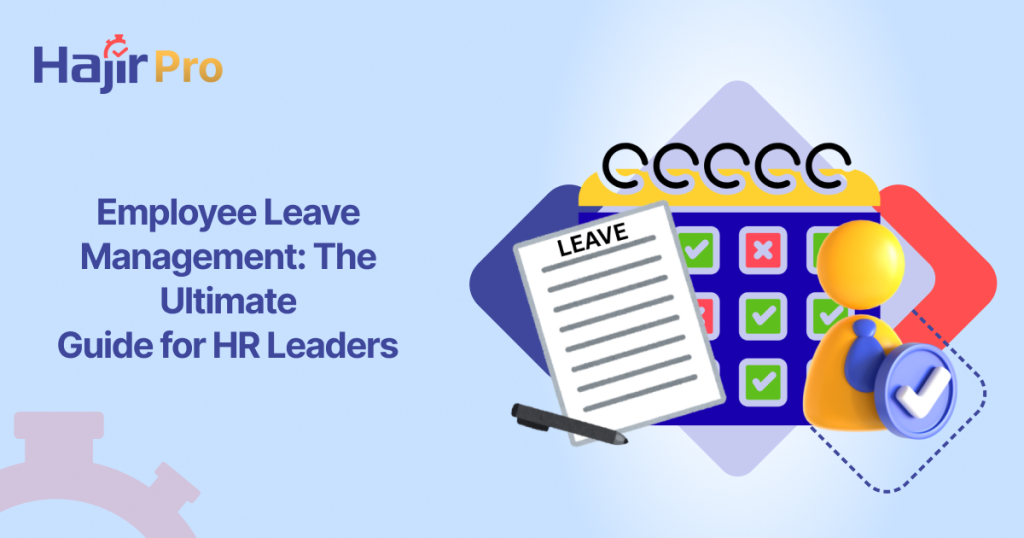
Employee leave management can be defined as a process of processing time-off requests, keeping proper records, administering the leave policies uniformly and ensuring that the absence does not disrupt the running of the organization.
It includes the establishment of guidelines for various forms of leave, ease of approvals, and the linking of data with payroll systems. To HR leaders, leave management is not simply granting or denying leave requests but also being fair, as well as avoiding disruptions and ensuring employee engagement.
Types of Employee Leave Every Organization Should Know
Knowing about the different types of leave can help HR leaders create policies and prevent conflicts. Here are some of the most standard types that every organisation should set up:
Annual Leave
Compensation that is accumulated based on the number of years served. For rest or travel and/or personal use. Usually 12 days every year as per the Nepalese Labour Act 2074.
Sick Leave
Leave is allowed for those who are sick or injured. Must have a clear policy of paid days, when a medical certificate is required and how it relates to payroll.
Maternity and Paternity Leaves
Maternity leave is a period of leave granted to a new mother around the time of childbirth. Paternity leave is provided to help new fathers. In Nepal both are obligatory and should be accurately shown in payroll.
Emergency and Bereavement Leave
Bereavement Leave is a short-term leave for unforeseen personal circumstances, a family crisis, death of a close relative etc. If they have a defined policy, it means they will not face ambiguity during difficult times.
Compensatory Leave
Granted to those staff who have done overtime, worked on a weekend or a public holiday. Must be carefully tracked and recorded.
Unpaid Leave
Approved time off that is not compensated. Typically used when all paid leave is exhausted. Must be correctly reflected in payroll to avoid salary calculation errors.
Why Employee Leave Management Matters for HR Leaders
Managing employee leave is a very important aspect of the employment relationship and business continuity. Clarity of employees regarding leave entitlement and availability of an easy method of seeking time off creates credibility. Meanwhile, HR leaders can access precise data, which they can use in planning the workforce.
Inefficient tracking of leave may lead to inaccuracies in payrolls, legal problems, and even dissatisfaction of employees. Good systems, on the other hand, minimize absenteeism and sustain productivity and adherence to local labor laws. HR leaders are also able to see the trends, like high sick leave that could signal larger organizational problems.
Therefore, leave management is not merely an administrative activity, but it is a strategic operation that has direct influence on employee morale and organizational performance.
Employee Leave Policy: What It Should Include
A strong leave policy helps eliminate confusion and ensures uniformity at both the organization and individual levels. These are the four components which every leave policy should include:
Leave Eligibility Criteria
Specifies the eligibility criteria for each type of leave, such as employment status, length of service or department. As an example, annual leave might not be available until after the probation period has expired.
A proper leave tracking software ensures these rules are applied automatically without manual effort.
Leave Application and Approval Process
Describes the process for employees to request, notice period, and who will approve. With a clear workflow, there are no delays and consistent handling of every request.
Leave Carry-Forward Rules
Describes number of leave days unused that can be passed on to next year, the conditions, and if left over days expire or get converted into cash. Avoids year-end conflicts.
Leave Encashment Policy
Determines the types of leaves that can be cashed, when they can be cashed (resignation, retirement, etc.), and the amount of the cash payout.
Employee Leave Management in Nepal: Legal Requirements
The minimum leave requirements applicable to all employers are defined in Nepal’s Labour Act 2074. Employees may complain about non-compliance and legal consequences may be faced.
Annual and Sick Leave Entitlements
- Leave entitlements are for employees after one year of service.
- 12 days annual leave fully paid per year.
- Have 12 days of sick leave per calendar year; the initial 3 days are covered at 100% pay.
- Leave not taken up to the entitlement will be counted as unpaid leave.
Maternity and Paternity Leave
- Women workers are entitled to take 98 days of maternity leave.
- 98 days, 60 days of fully paid days.
- Male employees will have 15 days paternity leave.
- It is important that the paid and unpaid elements of maternity leave are correctly recorded on payroll.
Public Holidays and Festival Leave
- All government declared public holidays are holidays with pay.
- The major festivals are Dashain, Tihar and others as announced every year.
- Leave calendar needs to be updated at the beginning of each year.
- Official holidays are determined by the Government of Nepal every year.
Common Challenges in Employee Leave Management
There are several issues that HR leaders struggle to cope with in terms of leave management. Manual procedures tend to cause delays in communication, absences that are not authorized, or rules that are not followed. The most frequently occurring challenges are
- Inequality in terms of leave policies between the departments or locations.
- Inaccuracy that is caused by spreadsheets or handwritten records.
- When the rules are not updated, there is a risk of compliance risks with labor laws.
- Delay of approval causes dissatisfaction to employees.
- Inaccurate calculations of leave balances in payroll.
Proper time and attendance management reduces these errors significantly.
Best Practices for Employee Leave Management
In order to have proper management of employee leaves, HR leaders must adhere to organized practices that bring out clarity and fairness.
- Establish Clear Leave Policies: Leave policies should be established that indicate eligibility, types of leave, rules of carry-forwards, and rules of approval. These policies should be made available to employees in a transparent way.
- Process Automation: Automation minimizes the errors, speeds up approvals, and combines leave data with the payroll. It also brings uniformity to the organization.
- Legal Compliance: Knowledge of legal requirements and regulations will prevent paying fines and lawsuits. Compliance safeguards both the staff and the company.
- Maintain Dependable Records: In the case of centralized records, the HR leaders can follow the trends of absenteeism and make factual judgments.
- Attention to Employee Communication: Employees should have a convenient way of applying for a leave and receive the notification of their approval. Open communication helps to develop trust and lessen conflict.
Following the practices will help organizations to have a smoother workflow, enhance the employee satisfaction, and improve the business results.
How HajirHR Simplifies Employee Leave Management
HajirHR is designed to ease the process of leave management by employees and HR teams. Rather than dealing with manual tracking or inconsistent policies, HR leaders are offered a system giving them flexibility, accuracy, and automation. The key features operate together in the following way:
1. Flexible Leave Arrangements and Policies
Each company has its leave management method. With HajirHR, it is easy to establish global or custom leave setups, establish rules by category, and establish weekly days off that are aligned with various departments or regions. It is also possible to import ready-made templates that the HR teams can use to make sure that the system will align with the requirements of the companies.
2. Simple Leave Requests and Approvals
Workers do not need to send endless emails and follow managers to keep up-to-date. Under HajirHR, they will only need to request a leave using the system. To an HR leader, the approval process is simplified through multi-level roles, and therefore the requests are submitted through the correct hierarchy. This guarantees fairness, transparency, and no confusion.
3. Automated Leave Adjustments
It can be a pain to work out paid or unpaid leave manually. This is automatically taken care of by HajirHR through its auto paid/unpaid leave allocation. In case of any mistakes, HR may change the leaves or even overrule the attendance in case of absolute necessity. This automation saves time on manual work as well as minimizes errors.
4. Intelligent Forward Carrying and Balancing
HajirHR manages leave lapses, carryover, and balance tracking instead of HR doing it manually by counting how many days one has to go. It is easier to keep the right records and make sure that employees receive the benefits of the leave they are entitled to without arguments.
5. Centralized Control
HajirHR offers global leave settings and user-defined leave components, which enable the HR leaders to be able to customize the policy fully. It may be sick leave, vacation, or special categories, but all this is organized in a single centralized platform.
Start Managing Leave the Right Way with Hajir HR
Employee leave management is a crucial aspect of HR work, as it influences not only the level of employee satisfaction but also the organizational productivity. A clear, transparent, and automated system will aid HR leaders to ensure compliance, reduce errors, and create trust in employees.
Despite the challenges, the correct practices and tools make leave management easy and efficient. HajirHR is a remarkable digital tool, as it provides the entire solution to suit the current HR requirements and thus businesses can handle the leave with an affirmation and effectiveness.